
Intro
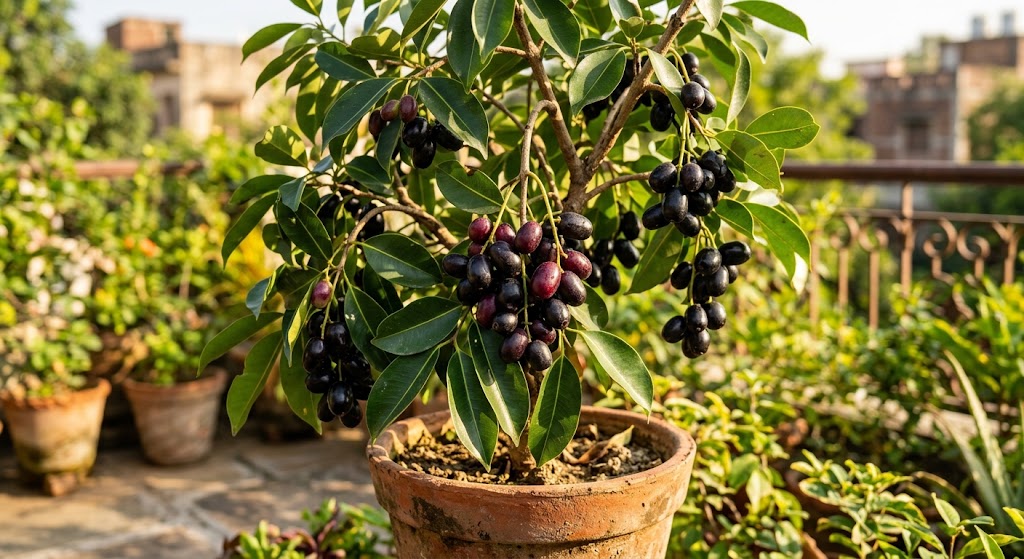
The Thai Jamun is the superstar of the jamun family. Unlike the tangy, seed-heavy jamuns of our childhood, this grafted Thai variety grows larger, juicier, and sweeter fruit — almost seedless, with a deep dark-purple skin that stains your fingers with summer happiness. Native to tropical Southeast Asia, it adapts beautifully to Indian gardens, balconies, and terraces. Best of all? A grafted plant starts fruiting within 1–2 years of planting, not the 7–10 years a seedling jamun needs. If you love homegrown fruit, the Thai Jamun is one of the easiest and most rewarding trees you can grow.
👉 Grab your own Thai Jamun plant here → https://bonotol.com/plants/thai-jamun-medium
Thai Jamun at a Glance (Quick Care Card)
| Care Factor | Requirement |
|---|---|
| Botanical name | Syzygium cumini (grafted Thai variety) |
| Sunlight | Full sun, 6–8 hours daily |
| Watering | Keep soil consistently moist; avoid waterlogging |
| Soil | Well-draining, rich loamy soil + compost |
| Best planting season | Monsoon (June–Sept) or Spring (Feb–April) |
| Fertilizer | Organic compost every 30–45 days |
| Pot / grow bag | 18×18 inch or larger |
| Ideal temperature | 22°C – 35°C |
| Fruiting | Within 1–2 years of planting |
| Harvest | Fruit matures during the rainy season |
| Lifespan | 25+ years, low maintenance |
Why Grow Thai Jamun? (5 Big Reasons)
- Bigger & sweeter fruit – Larger, juicy berries that are naturally sweet with only a tiny seed, compared to local varieties.
- Fruits fast – Grafted plants fruit within 1–2 years, not a decade.
- High yield – A single mature tree can produce kilograms of jamuns every season.
- Easy to maintain – Low-maintenance, hardy, and forgiving for beginners.
- Health powerhouse – Jamun is rich in iron, vitamin C, and antioxidants; the seed is famous in Ayurveda for managing blood sugar.
1. Sunlight — The Secret to Sweet Fruit ☀️
Thai Jamun is a sun-loving tropical tree. Place it where it gets 6–8 hours of direct sunlight every day. Full sun is essential for good flowering and maximum fruit sweetness. A shadier spot will give you plenty of leaves but fewer, less-sweet fruits. On a balcony or terrace, choose the sunniest corner you have.
2. Watering — Moist, Never Soggy 💧
- Young plants: Water every 2–3 days (daily in peak summer).
- Mature trees: Water once a week; more during fruiting season.
- Golden rule: Keep the soil consistently moist, but never waterlogged — jamun roots hate standing water and will rot.
Check the top 1–2 inches of soil with your finger; if it feels dry, it’s time to water.
3. Soil & Planting 🌱
- In pots/grow bags: Use an 18×18 inch grow bag or earthen pot with good drainage holes. Fill with a mix of garden soil + sand + compost.
- In the ground: Prepare a 1×1×1 ft pit with compost and red soil. Place the grafted plant upright, refill, and press lightly.
- After planting: Water thoroughly and keep the soil lightly moist for the first 15 days while the plant settles in.
4. Fertilizer — Feed It for Fruit 🌿
Feed your Thai Jamun with organic compost every 30–45 days. In the growing and fruiting season, add a balanced fruit-tree fertilizer or well-rotted cow dung compost. Good feeding = bigger, sweeter, more abundant fruit.
5. Temperature & Climate
Thai Jamun thrives in tropical and subtropical Indian climates, ideally between 22°C–35°C. It tolerates heat well and mild cold, but protect young plants from frost and harsh winter winds.
6. Pruning & Maintenance ✂️
- Light pruning in late winter keeps the tree compact and bushy.
- Remove dead, diseased, or crossing branches to improve airflow.
- Grafted trees stay manageable in pots; with light pruning, you can grow a productive jamun even on a small terrace.
7. Common Problems & Quick Fixes
| Problem | Cause | Fix |
|---|---|---|
| Yellowing leaves | Overwatering | Reduce watering, improve drainage |
| Few flowers/fruit | Not enough sun | Move to a full-sun spot |
| Stunted growth | Poor soil | Add compost and re-pot or top-dress |
| Fruit drop | Water stress | Water regularly during fruiting |
| Pests (aphids/leaf miner) | Insects | Neem oil spray every 7–10 days |
8. Flowering, Fruiting & Harvest
Thai Jamun flowers in summer, and the fruit matures during the rainy season. Fruits start green, then turn deep purple-black when ripe. Harvest when fully colored and slightly soft — these are at peak sweetness. Pluck carefully or let them fall onto a cloth below the tree.
❓ FAQ — Thai Jamun Plant
Q. How long does Thai Jamun take to fruit? A. A grafted Thai Jamun starts fruiting within 1–2 years of planting.
Q. Can I grow Thai Jamun in a pot? A. Yes! Use an 18×18 inch or larger grow bag with good drainage and keep it in full sun.
Q. Is Thai Jamun seedless? A. The Thai variety has a very small, nearly absent seed compared to local jamuns — much more fruit, less waste.
Q. What is the best time to plant? A. Monsoon (June–September) or Spring (February–April) are ideal.
Q. How often should I water it? A. 2–3 times a week for young plants, weekly for mature trees — keep soil moist, never soggy.
Q. Does jamun help in diabetes? A. Jamun fruit and seeds are traditionally used in Ayurveda to help manage blood sugar. Enjoy the fruit fresh for a healthy summer treat.
🌿 Where to Buy Thai Jamun
Bring this tropical sweetheart home from Bonotol — nursery-grown, freshly packed, and delivered across India with 15-day replacement protection.
👉 Buy Thai Jamun Plant (₹98) → https://bonotol.com/plants/thai-jamun-medium 👉 Explore all fruit plants → https://bonotol.com/plants/category/fruits-plant 👉 More plant care guides → https://help.bonotol.com/
Have a question about your Thai Jamun? Message us on WhatsApp (+91 98300 70008) — we’re happy to help!