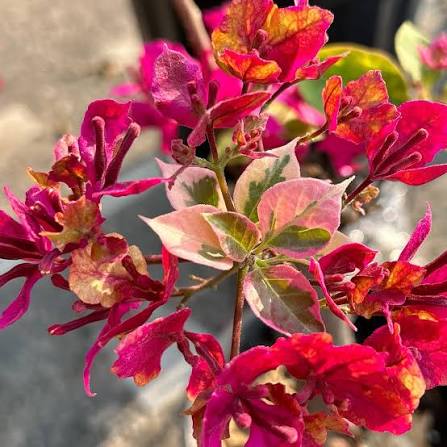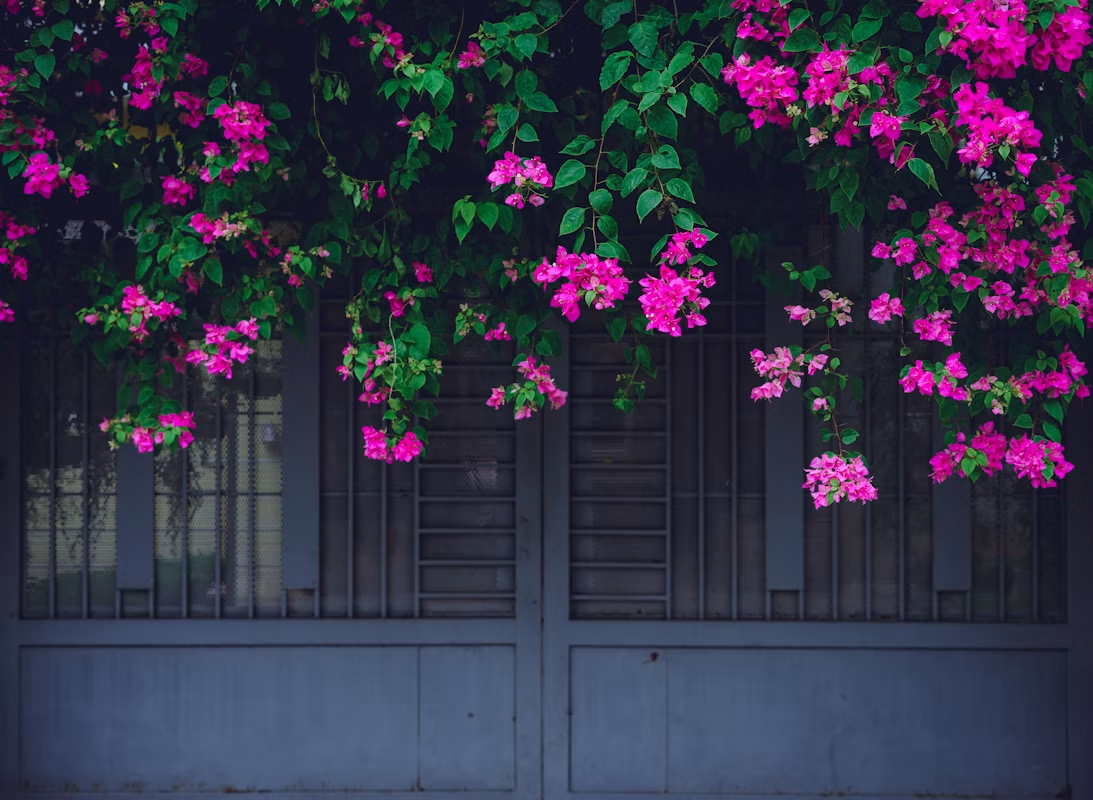

Buttercup Bougainvillea is a beautiful choice for Indian balconies, terraces, patios and home gardens. Its warm buttery-yellow to golden bracts can create a striking display when the plant receives plenty of sunlight and the right balance of watering, drainage and pruning.
Although Bougainvillea is generally considered a hardy plant, getting more flowers and fewer leaves requires a slightly different approach from caring for ordinary flowering plants. Too much water, shade or nitrogen-rich fertiliser can leave you with a healthy-looking green plant but very few colourful bracts.
This guide explains how to grow and care for Buttercup Bougainvillea in Indian conditions, including potting mix, sunlight, watering, fertilising, pruning, propagation, monsoon protection and winter care.
If you’re planning to add one to your garden, you can also explore nursery-grown Bougainvillea plants from Bonotol, along with suitable potting materials and planting accessories.
[Add link to Bonotol Buttercup Bougainvillea product page here]
What Is Buttercup Bougainvillea?
Buttercup Bougainvillea is grown primarily for its attractive yellow or golden-toned bracts.
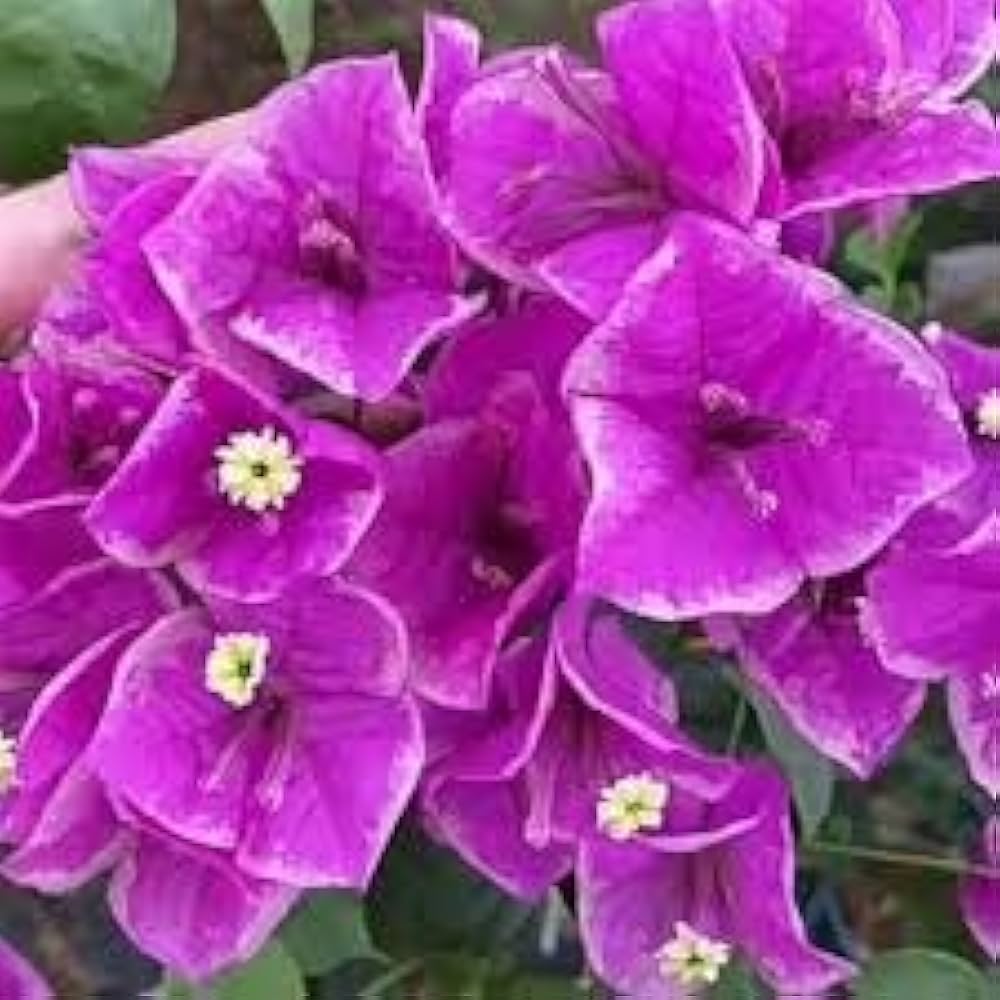
The colourful parts that most people call Bougainvillea flowers are technically bracts—modified leaves surrounding the plant’s small true flowers.
A healthy Buttercup Bougainvillea can be trained in several ways:
- As a flowering climber on a wall or trellis
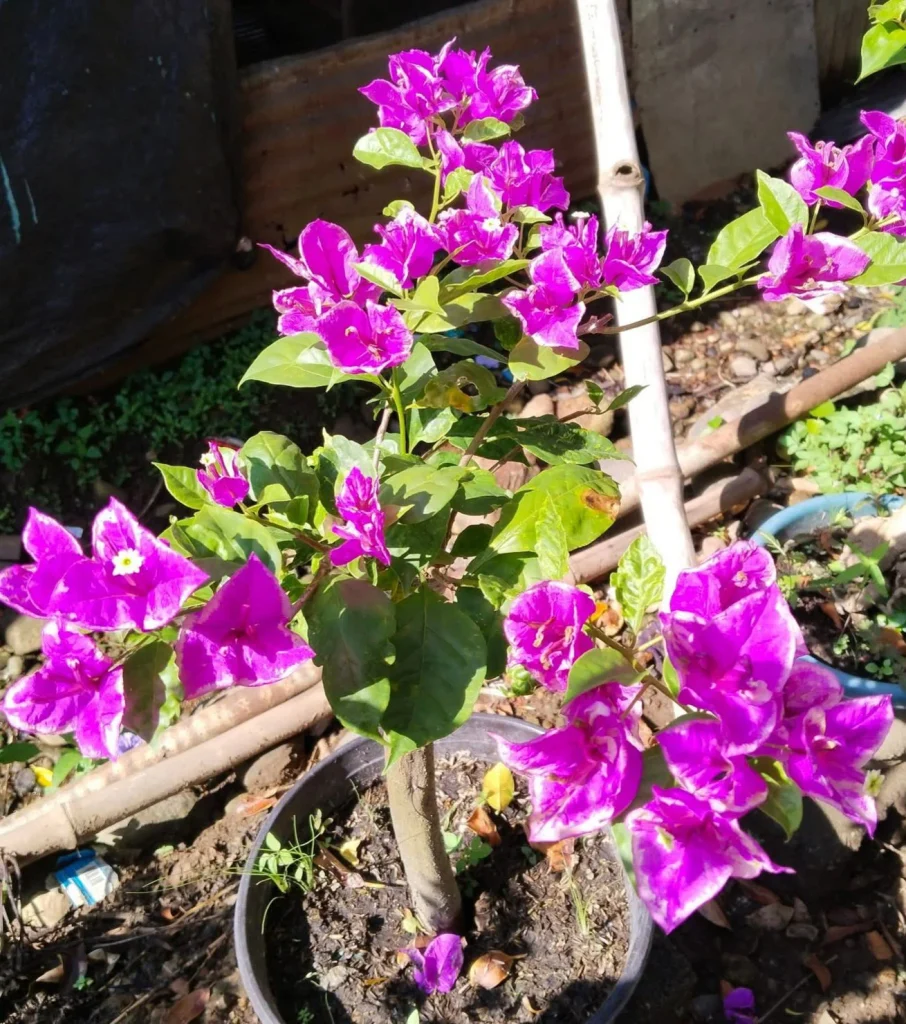
- In a large terrace pot
- As a compact flowering shrub
- Along fences and gates
- As a balcony specimen plant
- As a bonsai-style Bougainvillea
- Over arches and pergolas
Its ability to handle heat and strong sunlight makes Bougainvillea particularly suitable for many parts of India.
How Much Sunlight Does Buttercup Bougainvillea Need?
Sunlight is probably the most important factor determining whether your Bougainvillea flowers heavily.
Give Buttercup Bougainvillea approximately 6–8 hours of direct sunlight whenever possible.
A sunny terrace, rooftop, open balcony, courtyard or south/west-facing garden position usually works well.
Bougainvillea grown in insufficient sunlight may remain green and continue producing shoots, but flowering can be significantly reduced. Full sun and good drainage are consistently identified as core requirements for successful Bougainvillea cultivation.
Signs that your plant needs more sunlight
You may notice:
- Long, weak green shoots
- Large gaps between leaves
- Plenty of foliage but very few bracts
- Bracts fading quickly
- Slow flowering despite regular fertilising
Before adding more fertiliser to a Bougainvillea that refuses to flower, always check its sunlight first.
Best Soil Mix for Buttercup Bougainvillea
Buttercup Bougainvillea dislikes heavy soil that remains wet for long periods.
The ideal potting mix should drain quickly while retaining enough moisture to prevent the roots from becoming completely dry.
A practical home mix can be:
35% garden soil
25% coarse river sand or perlite
20% cocopeat or coco chips
15% well-decomposed compost or vermicompost
5% small charcoal pieces or other coarse drainage material
You do not have to follow these percentages exactly. The important point is that water should move through the pot easily.
If your local garden soil contains a lot of clay, avoid using it alone.
Heavy clay soil combined with Indian monsoon rain can keep Bougainvillea roots wet for too long.
Choosing the Right Pot
Bougainvillea often performs well when its root system is reasonably snug rather than being placed immediately into an oversized container.
For a young plant, increase the pot size gradually.
Terracotta, cement and sturdy plastic pots can all work, provided there are sufficient drainage holes.
For terrace gardening, choose a pot that:
- Has multiple drainage holes
- Does not collect standing water
- Is heavy enough to support a mature plant
- Can accommodate a trellis if required
Always avoid placing the pot directly over a drainage hole where excess water cannot escape.
During monsoon, raising the container slightly using pot feet, bricks or a stand can improve drainage.
How to Water Buttercup Bougainvillea
One of the most common Bougainvillea mistakes is overwatering.
Do not water according to a fixed calendar such as “every morning.”
Instead, check the soil.
Insert your finger approximately 2–3 cm into the potting mix. If it still feels moist, wait before watering.
When the upper layer becomes dry, water thoroughly until excess water begins draining from the bottom.
Then allow the soil to dry again.
Bougainvillea tolerates a somewhat drier root zone better than constantly wet soil. Excessive watering can contribute to weak growth, leaf yellowing and root problems.
Summer
During extremely hot weather, containers may dry considerably faster.
Check the plant frequently, particularly during April and May in hotter regions of India.
Monsoon
Reduce manual watering drastically.
If rain is regularly reaching the pot, additional watering may not be necessary at all.
Winter
Growth and evaporation generally slow, so watering frequency can usually be reduced.
Always judge the soil rather than following a fixed number of days.
Monsoon Care for Buttercup Bougainvillea
For gardeners in Kolkata, West Bengal, Assam, Odisha, Kerala, Mumbai and other regions receiving substantial monsoon rainfall, drainage becomes especially important.
The biggest objective is simple:
Do not allow the root zone to remain waterlogged.
During prolonged rain:
- Raise pots above the terrace floor.
- Make sure drainage holes are open.
- Remove trays containing standing water.
- Keep potted plants beneath a transparent or partially covered area during continuous heavy rainfall if necessary.
- Maintain as much sunlight as possible.
- Avoid unnecessary watering.
- Remove dead leaves around the soil surface.
- Improve airflow between closely placed plants.
Long wet periods can also encourage leaf spots and other fungal problems.
In humid eastern Indian conditions, monsoon management is therefore often more important than fertilising.
Winter Care in Different Parts of India
Bougainvillea responds differently depending on where you live.
Kolkata and Eastern India
Winter is usually excellent for Bougainvillea.
Keep the plant in maximum sunlight and reduce unnecessary watering. Once the heavy monsoon has passed, plants can produce excellent flowering displays under bright, comparatively dry conditions.
Delhi, Punjab, Haryana and colder North Indian areas
Protect younger potted plants from severe cold and frost.
Move containers near a sunny wall or more protected location during unusually cold nights.
Mumbai and Coastal Maharashtra
Winter conditions are generally comfortable for Bougainvillea. Continue providing full sun while avoiding excess watering.
Bengaluru and Interior South India
Bougainvillea can grow almost throughout the year. Regular pruning after flowering helps maintain shape and encourages fresh branching.
Kerala and Very Wet Coastal Areas
Rain management and drainage deserve special attention. Keep containers extremely free-draining and avoid excessive fertilisation during prolonged wet weather.
Regional differences in rainfall and winter temperatures mean care schedules should follow local conditions rather than a single India-wide calendar.
Best Fertiliser for Buttercup Bougainvillea
More fertiliser does not automatically mean more Bougainvillea flowers.
In particular, excessive nitrogen can encourage vigorous green leaves and stems at the expense of colourful bracts.
For an established plant, use modest amounts of:
- Well-decomposed compost
- Vermicompost
- Bone meal where appropriate
- A balanced flowering-plant fertiliser
- A fertiliser formulated with adequate phosphorus and potassium
Avoid repeatedly applying large quantities of urea or other high-nitrogen fertilisers when your goal is flowering.
Bougainvillea is not a heavy feeder.
During periods of active growth, light feeding every few weeks is usually preferable to excessive doses.
Never fertilise a severely stressed, waterlogged or recently damaged plant.
Allow it to recover first.
How to Get More Flowers on Buttercup Bougainvillea
If your Buttercup Bougainvillea has plenty of leaves but almost no colour, check these five things:
1. Increase sunlight
Aim for at least 6 hours of direct sunlight.
2. Reduce excessive watering
Allow the soil to dry moderately between waterings.
3. Avoid excess nitrogen
Constant nitrogen feeding can produce foliage rather than flowers.
4. Prune strategically
Bougainvillea produces flowering displays on new growth. Periodic pruning encourages branching and provides more potential flowering points.
5. Improve drainage
A permanently wet root zone is one of the easiest ways to make a Bougainvillea unhappy.
How and When to Prune Buttercup Bougainvillea
Pruning helps maintain the plant’s size and stimulates branching.
After a major flowering flush, trim excessively long shoots and remove:
- Dead branches
- Damaged stems
- Weak interior growth
- Crossing branches
- Unwanted suckers
- Excessively long shoots
Make cuts just above a healthy node.
For a bushier plant, pinch the growing tips of young shoots periodically.
Avoid unnecessarily severe pruning when the plant is already stressed by extreme heat, waterlogging or disease.
Wear gloves when pruning Bougainvillea because the stems may have sharp thorns.
Growing Buttercup Bougainvillea on a Terrace
Buttercup Bougainvillea is particularly attractive in terrace gardens.
Place the pot where it receives strong direct sunlight and use a support if you want it to climb.
You can train it along:
- Metal trellises
- Balcony railings
- Bamboo supports
- Pergolas
- Wall-mounted wire systems
- Garden arches
Tie young branches loosely using soft garden ties.
Never tightly wire a developing branch because the stem thickens as it matures.
A yellow-flowering Bougainvillea also combines beautifully with magenta, white, orange and red varieties when creating a multi-colour terrace display.
How to Propagate Buttercup Bougainvillea from Cuttings
Bougainvillea can be propagated from stem cuttings, although success rates vary according to variety, season and humidity.
Step 1: Choose a healthy stem
Select a healthy semi-hardwood stem without visible pest or disease damage.
Step 2: Take the cutting
Cut a section approximately 15–20 cm long.
Step 3: Remove lower leaves
Keep a few leaves near the upper portion and remove the leaves from the section that will enter the growing medium.
Step 4: Use rooting hormone
Rooting hormone is optional but can improve rooting reliability.
Step 5: Prepare the medium
Use a light propagation mix such as:
50% cocopeat + 50% coarse sand/perlite
The medium should be moist but not saturated.
Step 6: Plant the cutting
Insert the lower portion into the medium and gently firm it.
Step 7: Maintain humidity
Keep it in bright indirect light while rooting.
Avoid strong afternoon sun until roots have developed.
Propagation from Bougainvillea cuttings is commonly done using well-draining media and semi-hardwood or woody stems.
Common Buttercup Bougainvillea Problems
Lots of leaves but no flowers
Most likely causes include insufficient sunlight, excessive watering or excessive nitrogen.
Solution: Increase sun exposure, reduce unnecessary irrigation and review your fertiliser.
Yellow leaves
Possible reasons include overwatering, poor drainage, nutrient imbalance, natural ageing of older leaves or transplant stress.
Always check soil moisture first.
Leaves suddenly falling
Bougainvillea can drop leaves following:
- Repotting
- A sudden location change
- Severe overwatering
- Severe drying
- Root disturbance
- Major environmental changes
Correct the underlying problem and allow the plant time to recover.
Black or brown leaf spots
Wet foliage, high humidity and poor airflow can encourage fungal problems.
Remove badly affected leaves, improve air circulation and avoid keeping foliage continuously wet.
Mealybugs
Look for small white cotton-like clusters around leaves, stems and nodes.
Minor infestations can often be removed manually before they spread.
Aphids
Aphids commonly gather around tender new growth.
Inspect young shoots regularly so infestations can be controlled early.
Should You Repot a Flowering Bougainvillea?
If possible, avoid major root disturbance while the plant is covered in colourful bracts.
Repot when:
- Roots are severely congested
- Drainage has deteriorated
- The growing medium has become compacted
- The container is damaged
- The plant genuinely needs a larger pot
Move it only one pot size upward rather than transferring a small plant directly into an enormous container.
Bougainvillea roots can be sensitive to disturbance, so handle the root ball carefully.
Is Buttercup Bougainvillea Suitable for Beginners?
Yes.
Once you understand its basic requirements, Bougainvillea is relatively straightforward to maintain.
Remember four rules:
Maximum sunlight.
Excellent drainage.
Do not overwater.
Do not overfeed.
Following these principles solves a large percentage of common Bougainvillea problems.
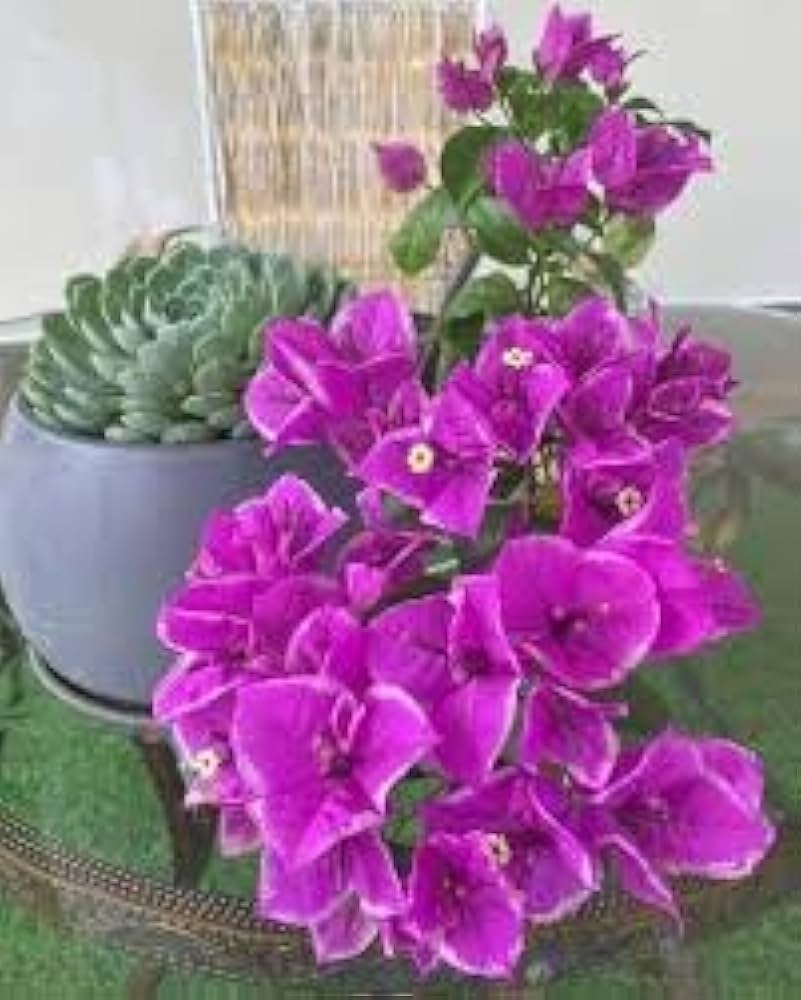
Buying Buttercup Bougainvillea Online in India
When buying a live Buttercup Bougainvillea online, choose a nursery that provides healthy, established plants and clear information about plant care.
At Bonotol, you can explore nursery-grown Bougainvillea varieties suitable for Indian home gardens, balconies and terrace collections.
Depending on availability, gardeners can also find potting materials, planting accessories and plant combinations that make it easier to establish new plants after delivery.
Explore Bougainvillea plants at Bonotol
Find All Bougainvillea Catagory
Buy Buttercup Bougainvillea online
If you have questions after receiving your plant, Bonotol’s aftercare support can also help you understand watering, repotting and placement based on your growing conditions.
Frequently Asked Questions
Does Buttercup Bougainvillea need full sun?
Yes. Strong direct sunlight is one of the most important requirements for good flowering. Aim for around 6–8 hours wherever possible.
Can Buttercup Bougainvillea grow in pots?
Yes. It performs very well in containers provided the pot has excellent drainage and receives sufficient sunlight.
Why is my Buttercup Bougainvillea not flowering?
Common reasons include insufficient sunlight, excessive watering, excessive nitrogen fertiliser and a lack of appropriate pruning.
How often should I water Bougainvillea in India?
There is no fixed schedule. Water deeply when the upper portion of the soil becomes dry and reduce watering considerably during rainy or cool weather.
Can Buttercup Bougainvillea survive the Indian summer?
Established Bougainvillea plants generally handle heat extremely well when acclimatised and watered appropriately. Bougainvillea is widely grown in hot Indian conditions.
Can I grow Buttercup Bougainvillea on a balcony?
Yes, provided the balcony receives several hours of direct sunlight. A heavily shaded balcony is unlikely to produce the best flowering.
What is the best time to propagate Bougainvillea in India?
Warm periods with suitable humidity are generally convenient for propagation. In many regions, spring, early summer or the beginning of the humid season can work well, provided cuttings are protected from waterlogging and harsh direct sunlight.
Final Thoughts
Buttercup Bougainvillea can become one of the standout plants in an Indian terrace or balcony garden.
You don’t need complicated maintenance to keep it healthy. Give it strong sunlight, fast-draining soil, controlled watering and sensible pruning, and avoid the temptation to constantly water or fertilise it.
During India’s monsoon, concentrate on protecting the roots from excess moisture. After the rainy season, return the plant to maximum sunlight, maintain moderate watering and prune when necessary to encourage fresh branching.
With the right conditions, those fresh branches can eventually transform into the warm yellow-golden display that makes Buttercup Bougainvillea such an attractive addition to a home garden.
For gardeners looking to start or expand a Bougainvillea collection, explore nursery-grown Bougainvillea plants from Bonotol and choose varieties suited to your balcony, terrace or garden.