
Why Bougainvilleas Are the Pride of Indian Gardens
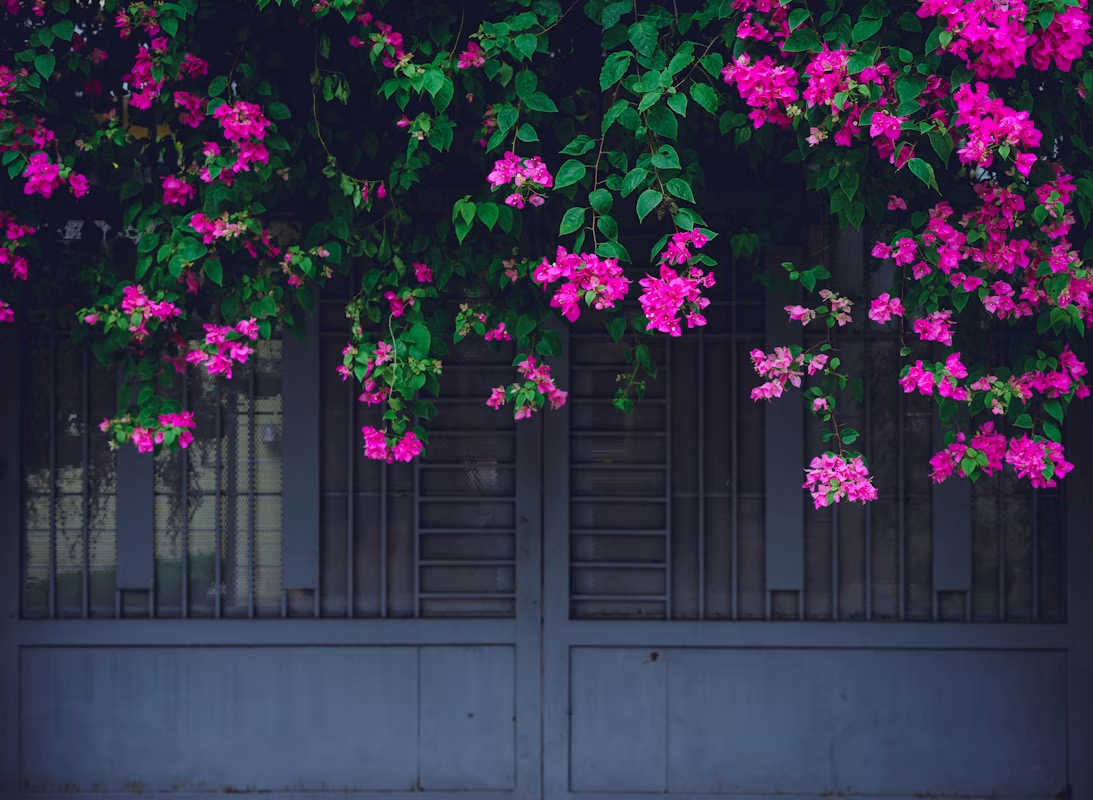
Few plants capture the vibrant energy of an Indian terrace or balcony quite like the bougainvillea. Known locally as baganbilas in Bengal or booganbel across northern states, this hardy, sun-loving climber produces breathtaking cascades of paper-thin bracts in shades of magenta, scarlet, orange, white, and golden yellow. While traditionally grown as sprawling boundary hedges or ground climbers over garden arches, modern urban living has proven that bougainvilleas thrive exceptionally well in containers and pots.
Growing bougainvillea in containers gives you total control over soil nutrition, drainage, and watering—the three golden keys to forcing dramatic blooming flushes. Whether you are gardening on a sunny terrace in Delhi, a coastal balcony in Mumbai, or amidst the humid tropical heat of Kolkata, this comprehensive guide will help you keep your potted bougainvilleas healthy, compact, and smothered in vivid blossoms throughout the year.
Understanding Bougainvillea: Sunlight and Growing Habit
Bougainvilleas are native to South America but have thoroughly adapted to the Indian subcontinent. To succeed with potted bougainvilleas, you must keep their natural physiology in mind. The colorful “petals” we admire are not true flowers; they are specialized leaves known as bracts that surround tiny, creamy-white true flowers. The production of these colorful bracts is directly influenced by direct sunlight and controlled environmental stress.
Sunlight Requirements
If there is one absolute rule for growing bougainvillea in India, it is sunlight. Bougainvilleas demand a bare minimum of 5 to 6 hours of unfiltered direct sunlight daily. If placed in partial shade, underneath a shade net, or on a north-facing balcony, the plant will produce lush, dark green foliage and long, thorny water shoots, but almost zero blooms. Position your containers on an open rooftop, south-facing balcony, or sunny patio where they receive the strongest midday sun.
The Ideal Potting Mix for Container Bougainvilleas
In their natural environment, bougainvilleas thrive in dry, rocky, and relatively lean soils. In a container, heavy clay garden soil is their worst enemy because it holds stagnant moisture around the delicate roots, leading to root rot and premature leaf drop.
Your potting mix must be fast-draining, gritty, and slightly aerated. A dependable potting mix recipe for Indian terrace gardeners includes:
- 40% Good Quality Garden Soil or Loam: Provides structure and base minerals.
- 30% Coarse River Sand, Fine Gravel, or Perlite: Ensures surplus water drains away within seconds.
- 20% Well-Rotted Cow Dung Manure (Gobar Khad) or Vermicompost: Delivers slow-release organic nutrients without overloading nitrogen.
- 10% Crushed Brick Pieces, Charcoal Chips, or Pumice: Promotes root aeration and prevents soil compaction over time.
- Optional Additions: A handful of neem cake powder (to deter root nematodes) and one tablespoon of steamed bone meal per 10-inch pot.
Avoid using heavy amounts of pure cocopeat for bougainvilleas. While cocopeat is excellent for moisture-loving houseplants like ferns and calatheas, it retains far too much water for a plant that prefers its roots to dry out between waterings.
Choosing the Right Pot
Bougainvilleas prefer being slightly root-bound before they put their full energy into flowering. Planting a young cutting directly into an oversized 18-inch pot often leads to excessive leaf growth and waterlogged soil.
- Pot Material: Unglazed terracotta (clay) pots are the best choice under Indian conditions. The porous walls allow root systems to breathe and help moisture evaporate evenly during sticky monsoon spells. High-grade plastic, ceramic, or cement pots can also be used provided they have generous drainage holes.
- Pot Size: Start young plants in an 8-inch to 10-inch container. As the root ball fills the pot over 1 to 2 years, step up to a 12-inch or 14-inch container.
- Drainage Holes: Ensure the container has at least two to three clear drainage holes at the base. Cover the holes with curved pot shards or gravel so soil does not block drainage.
Watering Bougainvillea: The Wet-and-Dry Technique
More bougainvilleas are killed by excessive affection—specifically overwatering—than by neglect. A constantly moist potting medium signals to the plant that conditions are ideal for leafy vegetative growth, leading to rampant vines and zero flowers.
How to Water Across Indian Seasons
- Summer (March to June): During intense heatwaves where temperatures cross 38°C to 45°C, containers dry out quickly. Check the pot daily. Water deeply when the top 1 to 2 inches of soil feel dry to the touch, ensuring water runs out of the base. Early morning is the best time to water.
- Monsoon (July to September): In regions with heavy, continuous rainfall like West Bengal, Kerala, and coastal Maharashtra, keep containers slightly elevated on pot feet or bricks so rainwater drains freely without waterlogging. Do not add supplementary water unless a dry interval occurs and the top layer dries completely.
- Winter (November to February): Growth slows down naturally in most parts of India. Cut watering frequency significantly. Allow the soil to dry out thoroughly between waterings. In places with distinct mild winters, slight water stress combined with bright winter sunshine triggers breathtaking flowering flushes.
Expert Tip: When you want to trigger fresh flowering, wait until your bougainvillea leaves show the very first hint of daytime wilting, then water moderately. Repeating this controlled dry spell twice over three weeks stimulates the plant’s survival mechanism, prompting it to produce flower buds instead of new leafy branches.
Fertilizer Schedule for Maximum Blooms
Bougainvilleas are moderate feeders, but they are highly sensitive to the balance of nutrients you apply. Too much chemical nitrogen results in massive green foliage, long soft stems, and brittle thorns, completely suppressing blooms.
Key Nutrients Needed
- Phosphorus (P): Promotes a strong, extensive root architecture and supports bud initiation.
- Potassium (K): The true secret to vibrant, long-lasting bracts and drought tolerance.
- Micronutrients: Iron, magnesium, and boron help prevent yellowing leaves (chlorosis) and support rich bract colors.
A Practical Indian Feeding Routine
- Monthly Base Feeding: Gently scratch the top inch of soil around the rim of the pot (avoid disturbing main roots near the stem). Work in two handfuls of aged vermicompost mixed with a teaspoon of bone meal and half a teaspoon of sulfate of potash (potassium schoenite or MOP/SOP). Water thoroughly immediately afterward.
- Bi-weekly Liquid Feed: During the active blooming season, apply a balanced organic seaweed extract solution or mustard cake tea (sarson ki khali liquid feed, fermented for 5 to 7 days and diluted to a pale tea color) once every 15 to 20 days.
- Monsoon Pause: Suspend heavy fertilization during continuous monsoon rains to prevent nutrient leaching and root burn.
Pruning and Shaping: The Key to Continuous Blooms
Bougainvillea flowers exclusively on new growth. If you let mature branches grow unchecked into long, unruly runners, flowering will become sparse and localized only at the very tips. Strategic pruning keeps the plant dense, compact, and packed with blooming points.
When and How to Prune
- Hard Pruning (Late Monsoon / Post-Rainy Season): In late August or September, or right as the heavy monsoon winds subside, cut back overgrown branches by one-third to one-half. Remove dead, diseased, or crossing branches to open up the canopy to sunlight.
- Tip Pinching (Ongoing): After a flowering flush fades and the colored bracts turn papery and dry, prune back the spent stems by 3 to 6 inches just above a leaf node. This encourages multiple lateral branches to emerge, each of which will carry a brand new bunch of flowers.
- Removing Water Shoots: Inspect the base of the plant regularly. Bougainvilleas occasionally produce rapid, vertical, extra-thorny shoots with unusually large leaves. Cut these vigorous suckers off at the base immediately, as they siphon energy away from blooming branches.
Common Bougainvillea Problems and Troubleshooting
While bougainvillea is exceptionally resilient, container cultivation can occasionally present challenges. Here is how to diagnose and fix common issues:
1. Lots of Green Leaves, But No Flowers
This is the most common grievance among Indian terrace gardeners. The culprit is almost always one of three things: insufficient direct sunlight, overwatering, or excessive nitrogen fertilizer. Move the pot to the sunniest location available, withhold water until the leaves begin to droop slightly, and switch from high-nitrogen feeds to potassium-rich fertilizers.
2. Sudden Leaf and Flower Drop
If your plant suddenly sheds both open bracts and healthy green leaves, it is reacting to sudden environmental shock. Common causes include shifting a plant abruptly from bright sun to shade, severe underwatering followed by heavy flooding, or sudden water accumulation in the saucer beneath the pot. Ensure drainage holes are unblocked and avoid relocating established plants frequently.
3. Pale or Yellowing Leaves (Chlorosis)
Yellowing leaves with green veins indicate a micro-nutrient deficiency, commonly iron or magnesium. This often happens in container plants when frequent watering leaches trace minerals from the soil. Dissolve 2 grams of Epsom salt (magnesium sulfate) per liter of water and apply as a soil drench or light foliar spray once a month.
4. Common Pests: Aphids, Caterpillars, and Mealybugs
Bougainvilleas are generally pest-resistant, but tender young growth during spring and early monsoon can attract leaf-eating caterpillars, aphids, or mealybugs. Spray the foliage with cold-pressed neem oil (5 ml neem oil plus 2 ml liquid dish soap per liter of water) during late evening hours once a week until pests disappear.
Popular Bougainvillea Varieties for Indian Pots
While all varieties can be container-grown, certain cultivated varieties perform remarkably well in pots due to their naturally compact or weeping habits:
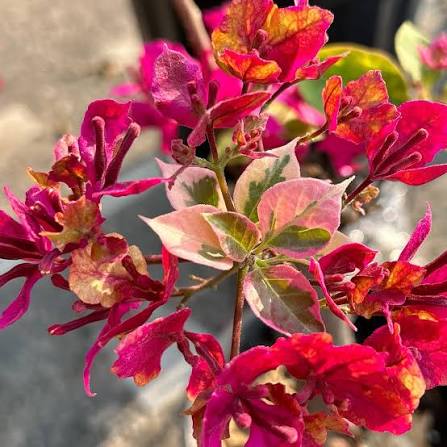
- Thai Chitra: Highly sought after for its striking variegated, multi-tonal white and pinkish-purple bracts that produce heavy clusters even in modest 10-inch pots.
- Mahara (Double Multi-Petaled Varieties): Dense, rose-like double bracts in bright magenta, crimson, or orange that stay on the plant much longer than single-petaled varieties.
- Barbara Karst: A prolific, deep crimson-red performer that tolerates scorching summer heat effortlessly.
- Torch Glow: A unique semi-dwarf variety where blossoms form tight, upright clusters reminiscent of flowering torches rather than climbing vines.
- Variegated Foliage Types: Varieties with cream-and-green or gold-and-green variegated leaves that provide decorative appeal on balconies even during non-blooming intervals.
Frequently Asked Questions
Can bougainvillea survive the scorching Indian summer heat on an open roof?
Yes. Bougainvilleas originate from warm, semi-arid regions and handle temperatures above 40°C very well. In fact, intense sunshine promotes brighter, deeper bract coloration. Just ensure container roots do not dry out to the point of permanent desiccation by checking soil moisture daily during May and June.
Why did my newly bought nursery bougainvillea drop all its flowers at home?
Nursery plants are often cultivated under optimized humidity and micro-climates. When transported to your home, changes in light, temperature, and root movement cause temporary transplant shock, shedding existing blooms. Do not panic. Place the plant in partial sunlight for 3 to 4 days, gradually transition it to full sun, and avoid heavy fertilization until fresh green growth emerges.
Is tap water safe for watering bougainvillea in India?
Standard municipal tap water or ground water with moderate dissolved salts is generally safe. However, if your borewell water has an excessively high TDS or alkaline salt level, you may notice white crusts forming around the clay pot rims and slow leaf yellowing. Flushing the container with rainwater during monsoon naturally dissolves and washes out residual salts.
How long can a potted bougainvillea live?
With periodic root pruning, repotting every 2 to 3 years, and regular maintenance, a container-grown bougainvillea can easily thrive for decades. Many enthusiasts successfully train aged bougainvilleas into magnificent, thick-trunked bonsai specimens that live for 25 to 50 years.
Buy bougainvillea