
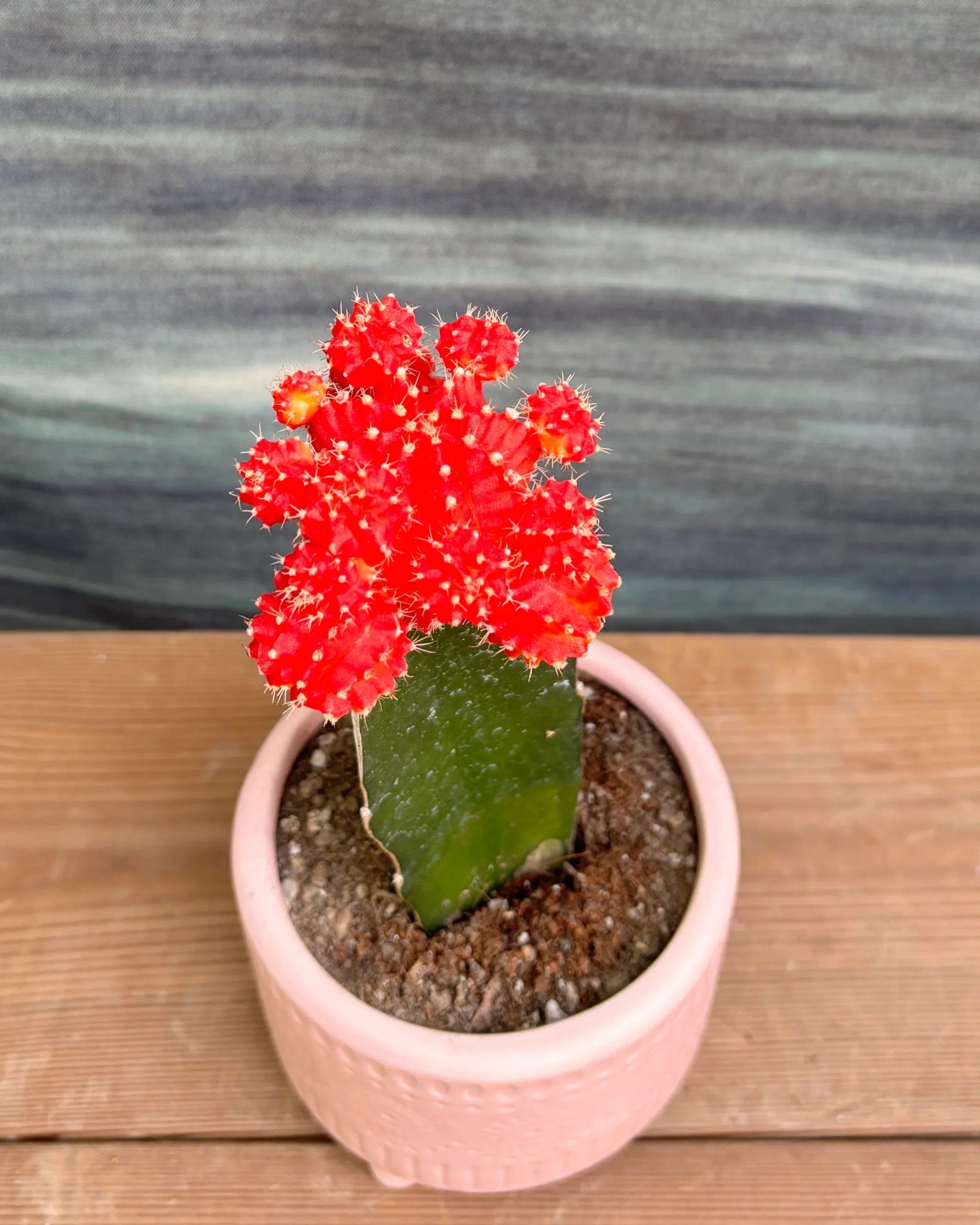
Pink Moon Cactus is one of those plants that immediately catches attention.
Its bright pink top sitting on a green cactus base gives it a colourful, almost artificial appearance, but it is a real living plant. The colourful upper portion is usually a grafted cactus that depends on the green rootstock below for survival.
Because of this grafted structure, Pink Moon Cactus needs slightly different care compared with many ordinary cacti.
The good news is that it is still quite easy to maintain once you understand one simple rule:
Do not overwater it.
For Indian homes, balconies and bright indoor spaces, Pink Moon Cactus can be a beautiful low-maintenance plant.
What Is a Pink Moon Cactus?
Pink Moon Cactus is a grafted cactus.
The brightly coloured top cannot usually produce enough chlorophyll on its own, so it is grafted onto a green cactus rootstock.
The lower green cactus provides:
- Water
- Nutrients
- Support
- Photosynthesis
This is why keeping the graft healthy is very important.
If the lower rootstock becomes weak or starts rotting, the colourful top may also decline.
Best Light for Pink Moon Cactus
Pink Moon Cactus likes bright light, but harsh Indian afternoon sun can damage the colourful top.
A good location is:
- Bright indirect light
- Morning sunlight
- East-facing window
- Bright balcony with filtered sun
Around 2–4 hours of gentle morning sunlight can work well.
Avoid suddenly placing a nursery-grown plant in strong afternoon sun during May or June.
The colourful upper section can develop:
- Bleached patches
- Brown spots
- Sunburn
If you want to move it into stronger sunlight, acclimatise it gradually.
Can Pink Moon Cactus Grow Indoors?
Yes.
Pink Moon Cactus is well suited to indoor growing as long as the room receives enough light.
Good indoor locations include:
- Near a bright window
- Beside an east-facing window
- Bright office desk near natural light
- Covered balcony
Avoid keeping it permanently in a dark corner.
Low light can weaken the rootstock and make the plant stretch or lose strength over time.
How Often Should You Water Pink Moon Cactus?
This is the most important part of Moon Cactus care.
Pink Moon Cactus does not like constantly wet soil.
Use this simple rule:
Water only when the potting mix has dried out significantly.
Do not water just because a certain number of days have passed.
Check the soil first.
Indian Summer
During very hot weather, the soil may dry faster.
Still, check before watering.
Monsoon
Be especially careful.
Humidity and rain can keep the soil wet for much longer.
Reduce watering and protect the pot from constant rain.
Winter
Growth slows, so watering should usually be reduced further.
Overwatering during winter is one of the easiest ways to cause root rot.
Signs of Overwatering
Watch for:
- Soft or mushy lower stem
- Yellowing rootstock
- Black patches
- Foul smell from soil
- Cactus becoming loose in the pot
If you notice these signs, stop watering immediately and inspect the roots.
Signs of Underwatering
Pink Moon Cactus is more tolerant of dryness than excess water.
Possible signs include:
- Slight wrinkling
- Shrunken rootstock
- Dry soil pulling away from the pot
Water thoroughly and allow excess water to drain.
Do not leave the pot standing in water.
Best Soil for Pink Moon Cactus
Use a very well-draining cactus mix.
The roots should never sit in wet, compact soil.
A simple mix for Indian conditions can be:
- 40% cactus or garden soil
- 30% coarse sand
- 20% perlite or pumice
- 10% compost
The goal is not to make the soil extremely rich.
The goal is fast drainage.
If your soil stays wet for several days after watering, it is too heavy.
Best Pot for Pink Moon Cactus
Use a pot with a proper drainage hole.
Terracotta pots are excellent because they allow moisture to escape faster.
Ceramic and plastic pots are also fine as long as drainage is good.
Avoid decorative pots without drainage.
If you want to use one, keep the cactus in a smaller nursery pot inside it and remove excess water after watering.
Does Pink Moon Cactus Need Fertiliser?
Pink Moon Cactus does not need heavy feeding.
You can use a mild cactus fertiliser during active growth.
Feed lightly once every 4–6 weeks during warmer months.
Avoid fertilising:
- In winter
- Immediately after repotting
- When the plant is stressed
- When roots are damaged
Too much fertiliser can burn roots and weaken the graft.
Less is better.
Best Temperature for Pink Moon Cactus
Pink Moon Cactus prefers warm conditions.
Indian indoor temperatures are generally suitable.
A comfortable range is roughly:
18°C to 30°C
Protect it from:
- Cold drafts
- Frost
- Extremely hot metal balconies
- Sudden temperature changes
In very hot cities, give some protection from intense afternoon heat.
Humidity and Indian Monsoon Care
Unlike tropical leafy plants, Moon Cactus does not need high humidity.
In fact, very humid conditions combined with wet soil can increase the risk of rot.
During Indian monsoon:
- Keep the plant under cover
- Avoid constant rain
- Improve airflow
- Reduce watering
- Keep the soil fast-draining
Do not mist the cactus regularly.
Misting is unnecessary and can encourage fungal problems.
Why Is the Pink Top Changing Colour?
Some colour changes can happen naturally.
Possible reasons include:
- Too much direct sunlight
- Stress
- Old age
- Rootstock weakness
- Temperature extremes
If the coloured top becomes soft, black or mushy, this may indicate rot.
If it becomes pale or bleached, too much strong sunlight may be responsible.
What Is the Graft Line?
The graft line is where the colourful top meets the green cactus below.
This area should remain:
- Firm
- Dry
- Clean
- Free from black spots
Avoid keeping water around this joint.
If the graft becomes infected or starts rotting, the plant may separate.
Should You Remove Shoots from the Green Rootstock?
Sometimes the green lower cactus produces side shoots.
These shoots can take energy away from the colourful top.
If the rootstock begins producing strong side growth, you can remove those shoots carefully with a clean blade.
This helps the lower cactus continue supporting the grafted top.
Common Pink Moon Cactus Problems
Soft or Mushy Base
Usually caused by overwatering or poor drainage.
Brown Patches on Pink Top
Often caused by harsh direct sunlight.
Wrinkled Rootstock
May indicate severe dryness or root problems.
Black Spots
Can indicate fungal infection or rot.
Plant Leaning
The graft may have become weak, or the rootstock may be stretching due to low light.
Common Pests
Pink Moon Cactus can occasionally attract:
- Mealybugs
- Scale insects
- Spider mites
Inspect around the graft line and between small ridges.
For mild infestations, remove pests manually with a cotton bud dipped lightly in diluted rubbing alcohol.
Neem oil can also be used carefully, but avoid spraying during strong sunlight.
Repotting Pink Moon Cactus
Pink Moon Cactus does not need frequent repotting.
Repot when:
- Roots completely fill the pot
- Soil becomes compacted
- Drainage becomes poor
- The plant becomes unstable
Usually, moving up only one pot size is enough.
After repotting, wait a few days before watering so any damaged roots can dry and heal.
Can Pink Moon Cactus Produce Flowers?
Yes, Moon Cactus can sometimes produce flowers, although flowering depends on the plant’s health, age and growing conditions.
Do not worry if your plant never flowers.
Most people grow Pink Moon Cactus mainly for its colourful appearance.
Pink Moon Cactus Care During Indian Summer
During hot Indian summers:
- Give morning sunlight
- Avoid harsh afternoon exposure
- Check soil more frequently
- Do not overwater
- Improve airflow
- Avoid fertilising during extreme heat stress
A bright location with gentle sunlight is usually better than intense rooftop heat.
Pink Moon Cactus Care During Indian Monsoon
Monsoon is the season when you should be most cautious.
The biggest risks are:
- Excess moisture
- Poor drainage
- Fungal infection
- Root rot
Keep the cactus protected from heavy rain.
Do not water if the soil is still damp.
Pink Moon Cactus Care During Winter
In winter:
- Reduce watering
- Keep the plant bright
- Protect from cold drafts
- Avoid fertiliser
In colder parts of India, keep it indoors near a sunny window.
Simple Pink Moon Cactus Care Chart
| Care Requirement | Recommendation |
|---|---|
| Light | Bright indirect light or gentle morning sun |
| Watering | Only after soil dries |
| Soil | Fast-draining cactus mix |
| Pot | Must have drainage hole |
| Fertiliser | Mild cactus feed every 4–6 weeks |
| Humidity | Low to moderate |
| Temperature | Warm conditions preferred |
| Monsoon Care | Keep protected from excess rain |
| Difficulty | Easy |
| Main Risk | Overwatering |
Is Pink Moon Cactus Good for Beginners?
Yes.
Pink Moon Cactus is a good beginner plant if you can resist watering it too often.
The biggest mistake new cactus owners make is treating it like a leafy houseplant.
It needs much less water.
Give it bright light, fast-draining soil and a dry period between watering, and it can remain attractive for a long time.
Final Thoughts
Pink Moon Cactus is a small plant with a lot of personality.
Its bright colour makes it perfect for:
- Desks
- Window shelves
- Balconies
- Small apartments
- Plant collections
- Gifting
For Indian conditions, the most important rule is simple:
Protect it from excessive rain and excessive watering.
Bright light, good drainage and moderate care are usually enough to keep your Pink Moon Cactus healthy and colourful.
If you are looking to add one to your collection, you can buy Pink Moon Cactus online from Bonotol.
FAQ
How often should I water Pink Moon Cactus?
Water only when the soil has dried significantly. Avoid fixed watering schedules.
Can Pink Moon Cactus survive indoors?
Yes, provided it receives plenty of bright light.
Does Pink Moon Cactus need direct sunlight?
Gentle morning sunlight is beneficial, but strong afternoon sun can burn the coloured top.
Why is my Pink Moon Cactus becoming soft?
Softness usually indicates excess water, root rot or poor drainage.
Can I keep Pink Moon Cactus in an AC room?
Yes, but keep it away from direct cold airflow and provide enough light.
Should I mist Pink Moon Cactus?
No. Regular misting is unnecessary and can increase the risk of fungal problems.
Does Pink Moon Cactus need a large pot?
No. A small, well-draining pot is usually better than an oversized container.
Is Pink Moon Cactus difficult to maintain?
No. It is relatively easy as long as it is not overwatered.