
If you enjoy discovering mango varieties beyond the familiar Himsagar, Langra or Amrapali, Haribhanga Mango deserves a place on your list. Also written as Harivanga Mango in parts of India, this distinctive mango variety is strongly associated with the Rangpur region of northern Bangladesh, where it has become one of the area’s best-known fruits.
Haribhanga is valued for its sweet, fleshy fruit, relatively small stone and distinctive flavour. The variety has also attracted increasing interest among mango growers and home gardeners looking for something a little different from the mango cultivars commonly grown in India.
What Is Haribhanga Mango?
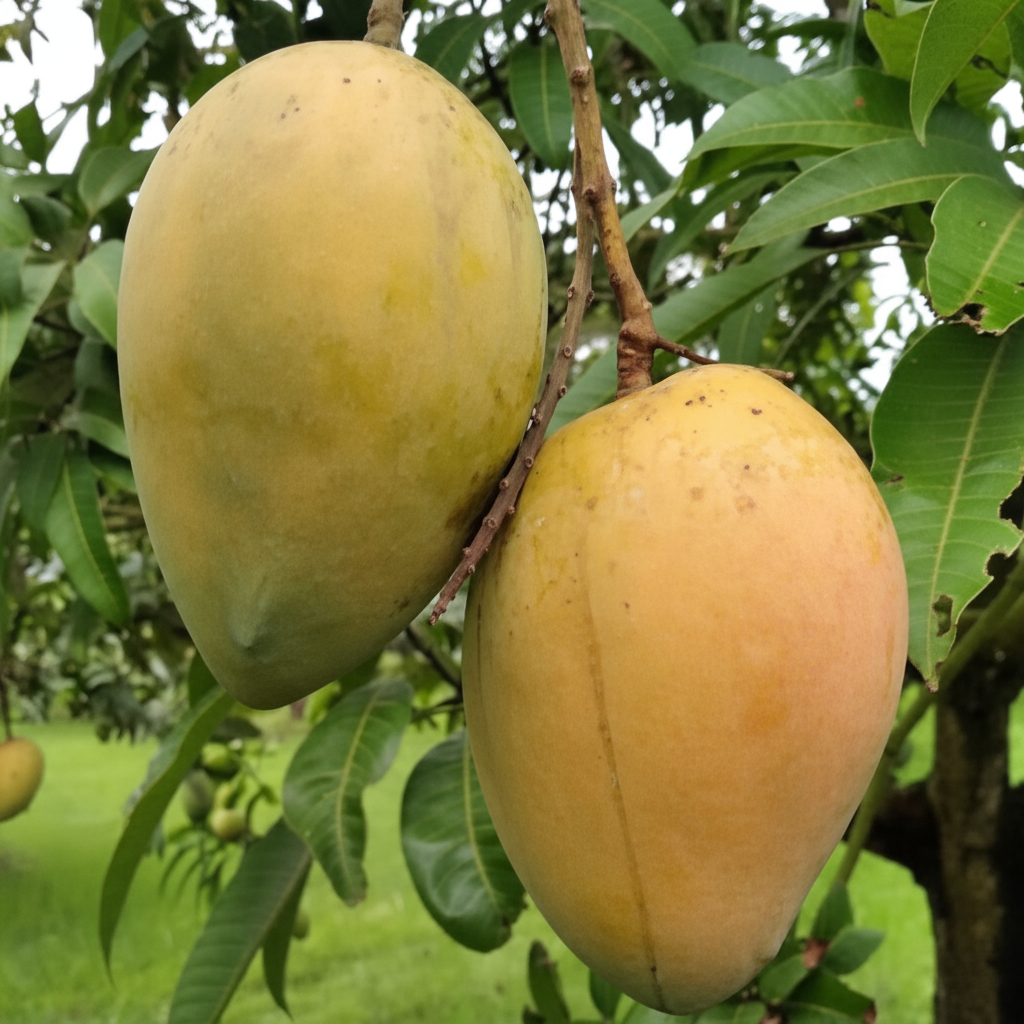
Haribhanga is a mango cultivar originating in Bangladesh and particularly associated with Rangpur district in the north-western part of the country. The fruit is generally round rather than strongly elongated and is known for having a high proportion of edible flesh. Individual fruits commonly fall in roughly the 200–400 gram range, although larger fruits can occur.
The variety has gradually expanded beyond its original growing region as growers have propagated desirable trees through grafting and planted them in orchards and home gardens.
Haribhanga or Harivanga — Which Name Is Correct?
You may come across several English spellings of the name, including Haribhanga and Harivanga. Haribhanga is the spelling most frequently used in published references from Bangladesh, while Harivanga is also used by nurseries and plant sellers in India.
They generally refer to the same Rangpur-associated mango cultivar. For gardeners searching online, it is therefore useful to recognise both names.
Where Did Haribhanga Mango Originate?
The story of Haribhanga is closely tied to Rangpur, Bangladesh, especially the Mithapukur area. Over time, the mango became increasingly popular throughout Rangpur and neighbouring northern districts.
There are different local accounts surrounding the precise origin of the variety and its unusual name. One widely reported story connects the name with earthen pots. According to a more recent account from Rangpur, an early tree was cared for using hanging earthen pots filled with water, and the pots were repeatedly broken. The expression associated with those broken pots eventually became linked with the mango’s name.
Whatever the exact details of the naming story, Haribhanga went from being a local mango to an important commercial crop. Today, thousands of growers in the Rangpur region are involved in its cultivation and trade.
What Does Haribhanga Mango Taste Like?
The main attraction is the fruit itself. A ripe Haribhanga mango is known for being sweet, aromatic and fleshy, with relatively little fibre compared with many traditional mango varieties.
- Flavour: Rich, sweet mango flavour
- Texture: Soft and fleshy when properly ripe
- Fibre: Generally regarded as low-fibre to fibreless
- Fruit size: Usually medium-sized
- Shape: Rounded to slightly oval
- Stone: Relatively small compared with the amount of pulp
This high pulp-to-stone ratio is one of the reasons the variety is particularly enjoyable as a table mango.
When Is Haribhanga Mango Season?
Haribhanga is generally considered a mid-season mango. In Bangladesh, commercial harvesting typically begins around the middle or latter part of June and continues into July. Bangladesh’s Department of Agricultural Extension also lists Haribhanga among the country’s notable mid-season mango varieties.
The exact harvest period can shift according to local climate, flowering time and temperature. Trees grown in different parts of India should therefore not be expected to follow precisely the same calendar as orchards in Rangpur.
Can Haribhanga Mango Be Grown in India?
Yes. Mangoes naturally favour tropical and subtropical conditions, making many parts of India suitable for growing Haribhanga provided the tree receives sufficient sunlight, good drainage and appropriate care.
Gardeners in warm regions of West Bengal, Odisha, Bihar, Jharkhand, Assam and much of central and southern India can potentially grow this variety where ordinary mango trees perform well. Local winter temperatures, heavy monsoon waterlogging and soil drainage should always be considered before planting.
Sunlight Requirements
Haribhanga mango should be planted where it receives full sunlight. Around six to eight hours or more of direct sun is preferable for strong vegetative growth, flowering and eventual fruit production.
A young plant can be protected from extreme stress immediately after transplanting, but mango trees should not be permanently kept in deep shade.
Best Soil for Haribhanga Mango
The most important requirement is good drainage. Mango roots dislike remaining continuously wet, especially during the rainy season.
A fertile loamy or sandy-loam soil enriched with well-decomposed organic matter works well. If your garden contains very heavy clay, improve drainage before planting rather than simply filling the planting hole with rich compost.
How to Water a Haribhanga Mango Plant
Young mango plants need more regular watering while their root systems become established. Water thoroughly and then allow the upper portion of the soil to begin drying before watering again.
Once established in the ground, mango trees are considerably more tolerant of short dry periods. Constantly wet soil is normally more dangerous than allowing a mature tree to experience a modest dry interval.
Can Haribhanga Mango Grow in a Pot?
A young Haribhanga mango plant can be grown in a container, particularly during its early years. Choose a large container with generous drainage holes and use a free-draining growing medium.
However, mango is naturally a tree rather than a permanently compact houseplant. A container-grown tree will require periodic pruning, root-space management and eventually a suitably large pot. Garden planting offers considerably more room for long-term development.
Why Choose a Grafted Haribhanga Mango Plant?
For gardeners who want a particular mango variety, a grafted plant is generally preferable to growing a mango from seed. A seed-grown mango is genetically variable and may not produce fruit identical to the mango from which the seed came.
Grafting preserves the selected cultivar by joining it to a suitable mango rootstock. This is why named varieties such as Haribhanga are normally propagated vegetatively when maintaining varietal identity is important.
How Long Does a Haribhanga Mango Tree Take to Fruit?
There is no single guaranteed fruiting age. Fruiting depends on the age and maturity of the graft, climate, sunlight, nutrition, pruning, root development and general plant health.
A grafted mango normally has an advantage over a seedling because the scion originates from mature plant material, but buyers should be cautious about anyone promising an exact fruiting date. Good establishment during the first few seasons is more important than forcing a very young plant to carry fruit.
Basic Haribhanga Mango Care
- Light: Full sun.
- Water: Water deeply but avoid permanently wet soil.
- Soil: Fertile and well-draining.
- Climate: Warm tropical to subtropical conditions.
- Feeding: Use balanced nutrition appropriate for mango trees and the plant’s age.
- Pruning: Light structural pruning helps maintain a manageable canopy.
- Drainage: Particularly important during heavy monsoon rainfall.
A Mango With a Strong Connection to Rangpur
Haribhanga is more than another mango cultivar. It has become closely connected with the agricultural identity of Rangpur. Commercial cultivation has expanded substantially, and the crop now supports growers, orchard workers and mango traders across the region.
Its wider recognition reached India as well. In 2021, Bangladesh sent approximately 2,600 kilograms of Haribhanga mangoes to India as a goodwill gift, helping introduce the name to an even wider audience.
Haribhanga Mango vs Common Indian Mango Varieties
It is difficult to declare one mango “better” than another because flavour preference is personal. Himsagar is loved for its smooth pulp, Langra for its recognisable aroma and flavour, and Amrapali for its compact tree habit and deeply coloured pulp.
Haribhanga offers something different: a mango with a strong regional history, good flesh content, sweet flavour and relative rarity in many Indian nurseries. For mango collectors, that makes it particularly interesting.
Who Should Grow Haribhanga Mango?
Consider Haribhanga if you:
- enjoy collecting unusual mango varieties;
- want a sweet, fleshy table mango;
- have a sunny garden, terrace or suitable large container;
- live in a climate where mango trees already grow successfully;
- want a variety that is still relatively uncommon in many Indian home gardens.
Haribhanga Mango Plant at Bonotol
Bonotol offers the variety as the Harivanga Mango Plant. Plants are nursery-grown and intended for gardeners who want to establish this distinctive mango variety at home.
Before planting, choose the sunniest practical location and make drainage your first priority. A healthy mango tree is a long-term garden investment, so giving the young plant enough space and establishing a strong root system will pay off much more than trying to encourage rapid fruiting immediately.
Frequently Asked Questions
Is Haribhanga mango sweet?
Yes. Haribhanga is known as a sweet mango with fleshy pulp and relatively little fibre, making it particularly suitable for eating fresh.
Where does Haribhanga mango come from?
Haribhanga originates from Bangladesh and is particularly associated with the Rangpur region in the north of the country.
Are Harivanga and Haribhanga the same mango?
Harivanga is commonly used as an alternative spelling by some nurseries and sellers. Haribhanga is the spelling more widely used in published references relating to the Bangladeshi cultivar.
Can Haribhanga mango grow in West Bengal?
Yes. The warm subtropical climate of much of West Bengal is suitable for mango cultivation. Provide the tree with full sunlight and, especially during the monsoon, excellent drainage.
Can I grow Haribhanga mango on a terrace?
A grafted young plant can be maintained in a large container on a sunny terrace. Long-term container growing requires pruning, adequate root space, nutrition and careful watering.
When does Haribhanga mango ripen?
In its traditional growing region in Bangladesh, Haribhanga is regarded as a mid-season variety, with harvesting generally beginning around June and continuing into July. Local fruiting dates can differ when the tree is grown elsewhere.
Final Thoughts
For gardeners who already know India’s famous mangoes and want to try something less common, Haribhanga Mango is an interesting addition. Its connection with Rangpur, sweet fleshy fruit and growing reputation have taken it from a regional favourite to a mango increasingly recognised beyond Bangladesh.
Give the tree plenty of sun, free-draining soil, sensible watering and enough time to establish. Mango trees reward patience, and a well-cared-for Haribhanga can become much more than another plant in the garden.