

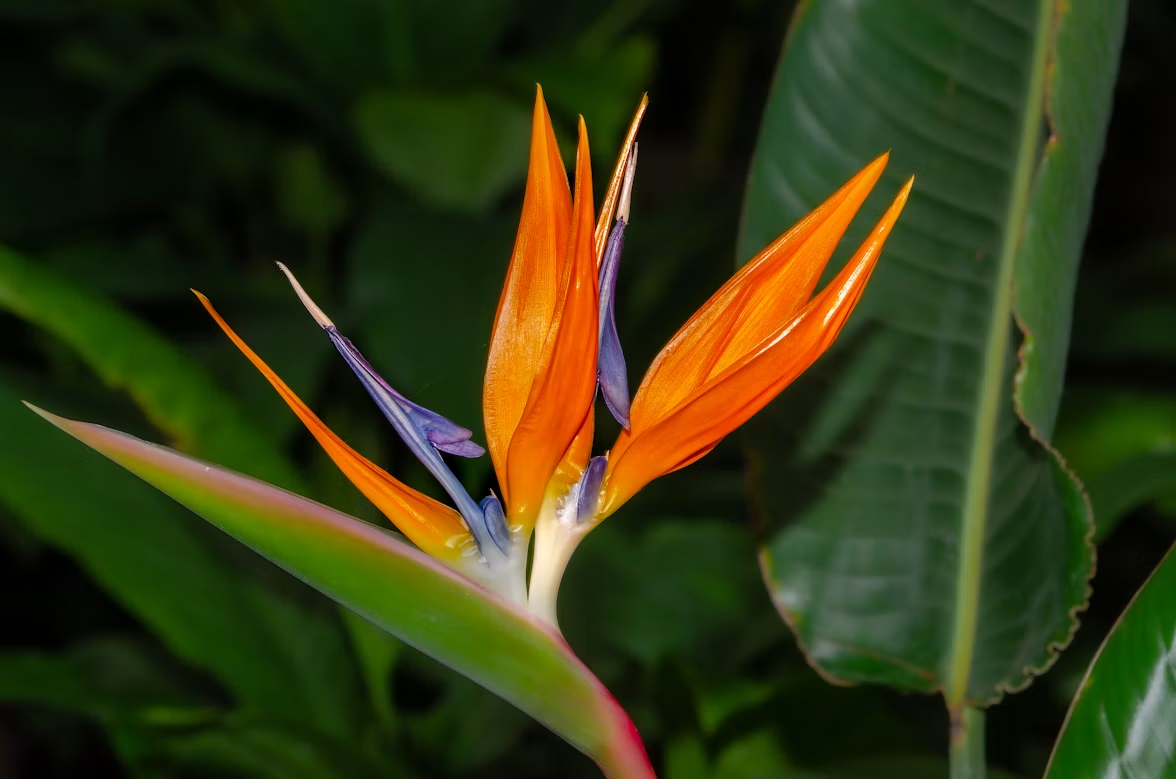
If there is one plant that can instantly give your balcony, terrace or garden a tropical look, it is the Bird of Paradise.
Its large, banana-like leaves look impressive even when the plant is not flowering. But once the orange and blue flowers appear, it becomes something completely different. The flower really does look like an exotic bird in flight, which is where the plant gets its common name.
The botanical name of the orange Bird of Paradise is Strelitzia reginae. It is originally from South Africa and naturally prefers warm conditions, bright light and well-draining soil.
That makes it well suited to many parts of India, especially if you understand how to manage our intense summer heat and heavy monsoon rain.
Is Bird of Paradise Suitable for Indian Weather?
Yes, in many regions it can grow very well.
Bird of Paradise enjoys:
- Warm temperatures
- Bright sunlight
- Humidity
- Good airflow
- Well-draining soil
RHS describes it as a warm-climate plant that likes plenty of bright light, humidity and regular watering during active growth.
Indian cities such as Kolkata, Mumbai, Bengaluru, Hyderabad, Chennai and many other warm regions can provide suitable conditions.
The biggest challenge is usually not temperature.
It is water management.
During the monsoon, Bird of Paradise can suffer if the roots remain wet for too long.
How Much Sunlight Does Bird of Paradise Need?
Bird of Paradise loves bright light.
For good growth, place it where it receives:
Around 4–6 hours of direct or strong filtered sunlight daily.
The South Florida guide says the plant can grow in full sun but often performs very well in part sun or part shade.
In India, this matters because our summer afternoon sun can be much harsher than in many temperate climates.
Best Placement in India
For balconies and terraces:
- Morning sunlight is excellent
- East-facing locations work well
- South-facing areas can work if the plant is acclimatised
- Protect very young plants from sudden harsh afternoon sun
If you’re keeping it indoors, place it near your brightest window.
A dark room is not suitable if you expect the plant to grow strongly or flower.
Best Soil for Bird of Paradise
Bird of Paradise does not like heavy, waterlogged soil.
It prefers soil that stays slightly moist but drains excess water quickly. RHS recommends well-drained or moist-but-well-drained growing conditions.
For Indian home gardeners, you can prepare a simple potting mix.
Recommended Potting Mix
Try:
- 40% garden soil
- 25% compost or vermicompost
- 20% cocopeat
- 15% coarse sand or perlite
The goal is to create a fertile soil mixture that does not remain soggy after watering.
If your local soil contains a lot of clay, add more coarse material to improve drainage.
How Often Should You Water Bird of Paradise?
Bird of Paradise likes regular watering, but this does not mean watering it every day.
The South Florida reference recommends regular irrigation while allowing the soil time to dry between waterings.
A simple rule is:
Water deeply when the top 2–5 cm of soil feels dry.
During Indian Summer
You may need to water more frequently because pots dry quickly.
Check the soil rather than following a fixed calendar.
During Monsoon
Be careful.
If the pot is receiving rain, reduce manual watering.
Make sure the drainage holes are open and never allow the pot to sit in stagnant water.
During Winter
The plant usually grows more slowly, so reduce watering.
RHS similarly recommends reducing watering during the cooler period.
Can Bird of Paradise Grow in a Pot?
Yes, very well.
In fact, it is an excellent container plant.
The South Florida guide specifically notes that Orange Bird of Paradise performs well in containers.
Start with a reasonably sized pot, but do not jump immediately to a gigantic container.
Bird of Paradise actually tends to flower better when it is slightly pot-bound rather than sitting in a pot that is far too large.
When roots completely fill the container, move the plant into a pot only one size larger.
Does Bird of Paradise Need Fertiliser?
Yes.
It is a fairly hungry plant once it begins active growth.
The reference article describes Orange Bird of Paradise as a heavy feeder, while RHS recommends balanced liquid feeding during the growing period.
For Indian gardeners, you can use:
- Vermicompost
- Well-rotted cow dung manure
- Compost
- Balanced NPK fertiliser
- Liquid seaweed fertiliser
A practical routine is to feed the plant every 3–4 weeks during active growth using a mild balanced fertiliser.
Avoid over-fertilising.
More fertiliser does not always mean more flowers.
When Does Bird of Paradise Flower?
This is the question everyone asks.
Bird of Paradise can take time to flower, especially if the plant is young.
RHS notes that plants may take several years to bloom and need sufficient light and nutrition to produce flowers.
Flowering is influenced by:
- Plant maturity
- Sunlight
- Nutrition
- Pot size
- Root development
- Overall plant health
A young plant may look perfectly healthy but still not be mature enough to flower.
That is normal.
Why Is My Bird of Paradise Not Flowering?
Usually one of these reasons is responsible.
1. Not Enough Sunlight
This is one of the most common problems.
The plant may survive in lower light, but flowering requires plenty of brightness.
2. The Plant Is Too Young
Young Bird of Paradise plants need time to mature.
3. Too Much Nitrogen
Too much nitrogen fertiliser produces large green leaves but may delay flowers.
4. Pot Is Too Large
A slightly root-bound Bird of Paradise often flowers better than one growing in an oversized pot.
5. Poor Drainage
Roots stressed by waterlogging will not support strong flowering.
Should You Prune Bird of Paradise?
Very little pruning is required.
The South Florida guide recommends removing only browned leaves and stems, while RHS lists Bird of Paradise as needing little or no regular pruning.
Remove:
- Yellow leaves
- Dry leaves
- Broken stems
- Spent flower stalks
Always use clean pruning shears.
Cut damaged leaves near the base rather than cutting halfway through the leaf.
Brown Leaf Tips: Is Something Wrong?
Brown tips are fairly common.
Possible reasons include:
- Irregular watering
- Low humidity
- Excess fertiliser
- Too much salt in the water or soil
- Harsh dry wind
- Root stress
If only the tips are brown but the rest of the plant looks healthy, it is usually not an emergency.
Check your watering routine first.
Why Are Bird of Paradise Leaves Splitting?
This surprises many new owners.
Split leaves are often normal.
In nature, the large leaves tear along the veins so that wind can pass through them without breaking the entire leaf.
So a few splits do not necessarily indicate poor plant health.
Common Pests on Bird of Paradise
Bird of Paradise is generally tough, but it can suffer from a few common houseplant pests.
RHS lists pests such as:
- Mealybugs
- Scale insects
- Spider mites
What to Do
Inspect:
- Undersides of leaves
- Leaf joints
- New growth
For mild infestations, neem oil or insecticidal soap can help.
Always test any spray on a small area first, especially during hot Indian weather.
Bird of Paradise Care During Indian Monsoon
Monsoon care deserves special attention.
The plant likes moisture, but it does not like wet roots.
During heavy rain:
- Move pots away from constant rainfall if possible
- Make sure drainage holes are clear
- Avoid keeping a saucer full of water under the pot
- Reduce manual watering
- Keep air moving around the plant
Good drainage is particularly important because the reference guide warns against planting Bird of Paradise in poorly drained areas.
Bird of Paradise Care During Indian Summer
During April, May and June, many Indian cities experience intense heat.
Mature plants can tolerate strong sunlight, but newly purchased nursery plants may need gradual acclimatisation.
You can:
- Give strong morning sunlight
- Protect from extreme afternoon heat initially
- Water deeply when soil begins to dry
- Mulch lightly, but keep mulch away from the stem base
The South Florida guide also warns against piling mulch directly around the plant because this can encourage stem rot.
Can Bird of Paradise Be Kept Indoors?
Yes, but only if you have enough light.
A Bird of Paradise kept in a bright room beside a large window can do well.
However, indoors it usually receives less sunlight than the same plant grown on a balcony or terrace.
If your main goal is flowering, an outdoor or very bright balcony location is normally better.
How Large Does Orange Bird of Paradise Grow?
Strelitzia reginae forms a dense clump of upright leaves.
RHS lists a typical mature height around 1–1.5 metres, though plants can become larger under favourable warm-climate garden conditions.
Give it enough space.
Do not crowd the plant between several other large shrubs.
Its leaf shape looks best when it has room to spread naturally.
Best Places to Grow Bird of Paradise in India
It works beautifully in:
- Balconies
- Terraces
- Entrance areas
- Courtyards
- Large planters
- Tropical gardens
- Poolside landscapes
- Patio gardens
Because of its large leaves and colourful flowers, it works particularly well as a statement plant rather than being hidden among many smaller plants.
Simple Bird of Paradise Care Chart
| Care Requirement | Recommendation |
|---|---|
| Sunlight | Bright light, around 4–6 hours sun |
| Watering | Water when upper soil begins to dry |
| Soil | Fertile and well draining |
| Pot | Medium to large pot with drainage |
| Fertiliser | Balanced feed every 3–4 weeks in growing season |
| Temperature | Prefers warm conditions |
| Humidity | Moderate to high |
| Pruning | Remove old or damaged leaves only |
| Flowering | Mature plants with good sunlight |
| Difficulty | Easy to moderate |
Final Thoughts
Bird of Paradise is one of those plants that looks far more difficult to grow than it really is.
The most important things are simple:
Give it plenty of light, use a well-draining potting mix, water only when needed and don’t rush to repot it every few months.
Once established, Strelitzia reginae can become a spectacular tropical feature in an Indian balcony, terrace or garden.
Even before it flowers, its bold green foliage makes it worth growing.
And when those orange and blue flowers finally arrive, you’ll understand exactly why it is called the Bird of Paradise.
FAQ
Can Bird of Paradise grow in Kolkata?
Yes. Kolkata’s warm and humid climate can suit Bird of Paradise very well. During monsoon, however, good drainage is essential.
Does Bird of Paradise need full sun?
It likes plenty of bright light and can tolerate full sun, although part sun can also work well.
Can I grow Bird of Paradise on a balcony?
Yes. A sunny balcony with enough room for the plant to spread is an excellent location.
How often should I water it?
Water when the top layer of soil begins to dry. Never keep the soil permanently waterlogged.
Is Bird of Paradise easy to grow?
Once sunlight and drainage are correct, it is fairly straightforward to maintain.
Why is my Bird of Paradise not flowering?
The most common reasons are insufficient light, a young plant, poor nutrition or an unsuitable potting setup.
Does Bird of Paradise like being root-bound?
Yes, slightly pot-bound plants can flower better than plants growing in oversized containers.