
Dracaena Darasingh
Dracaena fragrans 'Darasingh'
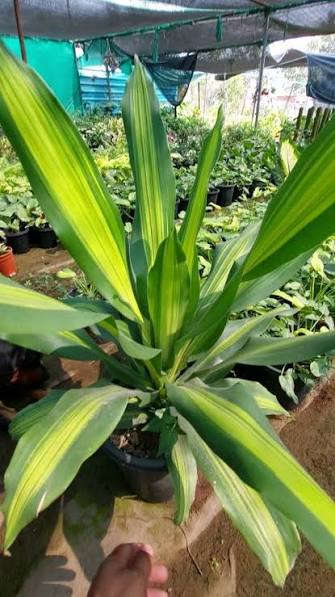
- Sunlight
- Dracaena 'Darasingh' thrives in bright, indirect light. Direct sunlight can scorch its leaves, leading to faded or brown spots. A north- or east-facing window is ideal, or a few feet away from a south- or west-facing window.
- Water
- Water thoroughly when the top 1-2 inches of soil feel dry to the touch, typically once every 7-10 days. Reduce watering frequency during the dormant winter months, allowing the soil to dry out a bit more between waterings. Avoid overwatering, which can lead to root rot.
- Soil
- This Dracaena prefers a well-draining potting mix. A standard indoor potting mix amended with perlite or coarse sand for improved drainage is suitable. Ensure the pot has drainage holes to prevent waterlogging.
- Fertilizer
- Feed your Dracaena 'Darasingh' with a balanced liquid houseplant fertilizer diluted to half strength once a month during the spring and summer growing seasons. Suspend fertilization during fall and winter when the plant's growth naturally slows down. Over-fertilization can cause salt buildup and leaf tip burn.
- Season
- Dracaena 'Darasingh' actively grows during the spring and summer, requiring more frequent watering and fertilization. In fall and winter, its growth slows, necessitating reduced watering and no fertilization. Maintain consistent indoor temperatures and humidity year-round for optimal health.
Care Instructions
Comprehensive Care Guide for Dracaena Darasingh
The Dracaena fragrans 'Darasingh', a striking cultivar known for its elegant foliage, makes a superb addition to any indoor plant collection. Its relatively easy-care nature makes it suitable for both novice and experienced plant enthusiasts. By following these guidelines, your 'Darasingh' will thrive and beautify your space.
Lighting
Dracaena 'Darasingh' prefers bright, indirect light. An ideal spot would be near an east-facing window, which provides gentle morning sun, or a few feet away from a south or west-facing window where the light is filtered. Direct afternoon sun can scorch its leaves, causing unsightly brown patches and a faded appearance. Insufficient light, on the other hand, can lead to leggy growth and less vibrant foliage. Observe your plant; if the variegation starts to diminish, it likely needs more light.
Watering
Consistent and appropriate watering is key to a healthy Dracaena 'Darasingh'. Water thoroughly when the top 1-2 inches of soil feel dry to the touch. This typically translates to once every 7-10 days, but can vary based on your home's humidity, temperature, and the size of the pot. When watering, ensure water drains out of the bottom of the pot, indicating that the entire root ball has been moistened. Discard any excess water from the saucer to prevent root rot. During the cooler, darker months of fall and winter, the plant's metabolic rate slows down, so reduce your watering frequency to prevent overwatering. Always err on the side of underwatering rather than overwatering, as Dracaenas are more tolerant of dry conditions than perpetually wet soil.
Humidity
While Dracaena 'Darasingh' can tolerate average household humidity, it appreciates and thrives in higher humidity levels. If your home air is particularly dry, especially during winter with heating systems running, you might notice brown leaf tips. To increase humidity, consider using a pebble tray filled with water beneath the pot (ensuring the pot doesn't sit directly in the water), misting the leaves occasionally (though this is a temporary solution), or placing a humidifier nearby. Grouping plants together can also create a microclimate with higher humidity.
Soil & Potting
A well-draining potting mix is crucial for preventing root rot. A standard indoor potting mix that is peat-based and includes perlite or coarse sand will provide the necessary aeration and drainage. Ensure your pot has adequate drainage holes at the bottom. Repotting is generally needed every 2-3 years, or when the plant becomes root-bound, indicated by roots growing out of the drainage holes or circling the inside of the pot. Choose a pot that is only one size larger than the current one to avoid overpotting, which can lead to excessive soil moisture.
Fertilization
During its active growing season (spring and summer), feed your Dracaena 'Darasingh' once a month with a balanced liquid houseplant fertilizer. It's best to dilute the fertilizer to half the strength recommended on the product label to avoid over-fertilization, which can burn the roots and cause leaf tip discoloration. Suspend all fertilization during the fall and winter months when the plant is in a period of reduced growth. Always apply fertilizer to moist soil, never to dry soil, to prevent root damage.
Pruning
Pruning is not always necessary but can be done to maintain shape, control size, or encourage bushier growth. You can trim off any yellowing or damaged leaves at their base. To encourage branching, you can 'top' the plant by cutting the main stem just above a leaf node. New growth will emerge from below the cut. Use clean, sharp shears to make precise cuts and minimize stress to the plant.
Pest Management
Dracaena 'Darasingh' plants are generally resistant to pests, but occasionally they can encounter common houseplant pests like spider mites, mealybugs, or scale. Inspect your plant regularly, especially the undersides of leaves and stem joints. If pests are detected, isolate the plant immediately. For minor infestations, wipe the leaves with a damp cloth or use insecticidal soap. For more persistent issues, horticultural oil can be effective. Always follow product instructions carefully.
Common Problems
Common Problems & Solutions for Dracaena Darasingh
Brown Leaf Tips
Cause: Low humidity, underwatering, or fluoride in tap water.Solution: Increase humidity with a humidifier or pebble tray, water consistently, and consider using filtered or distilled water.
Yellowing Lower Leaves
Cause: Often a natural aging process, but can also indicate overwatering or nutrient deficiency.Solution: Remove old yellow leaves. Check soil moisture and adjust watering if overwatering is suspected. Ensure proper fertilization during growing season.
Drooping Leaves
Cause: Underwatering or sometimes overwatering (root rot).Solution: Feel the soil; if dry, water thoroughly. If soil is wet and plant is drooping, check for root rot and repot if necessary.
Pale or Fading Leaves
Cause: Too much direct sunlight.Solution: Move the plant to a location with bright, indirect light.