
Orchids have a reputation for being difficult plants.
You see one covered in beautiful flowers at a nursery, fall in love with it, bring it home—and a few weeks later the flowers drop. Then the leaves start looking different, the roots turn silver, and suddenly you are wondering whether the plant is dying.
The good news is that orchids are not nearly as difficult as many people think.
They are simply different from ordinary houseplants.
Most of the orchids we grow at home do not naturally grow in garden soil. In the wild, many tropical orchids grow attached to trees, branches, rocks, and other surfaces where their roots receive plenty of air.
Once you understand this one basic fact, orchid care becomes much easier.
In this guide, we’ll cover everything you need to know about orchid care for beginners, including watering, sunlight, humidity, potting media, fertilizer, repotting, root care, and how to encourage your orchid to flower again.
Why Are Orchids Different From Normal Houseplants? #
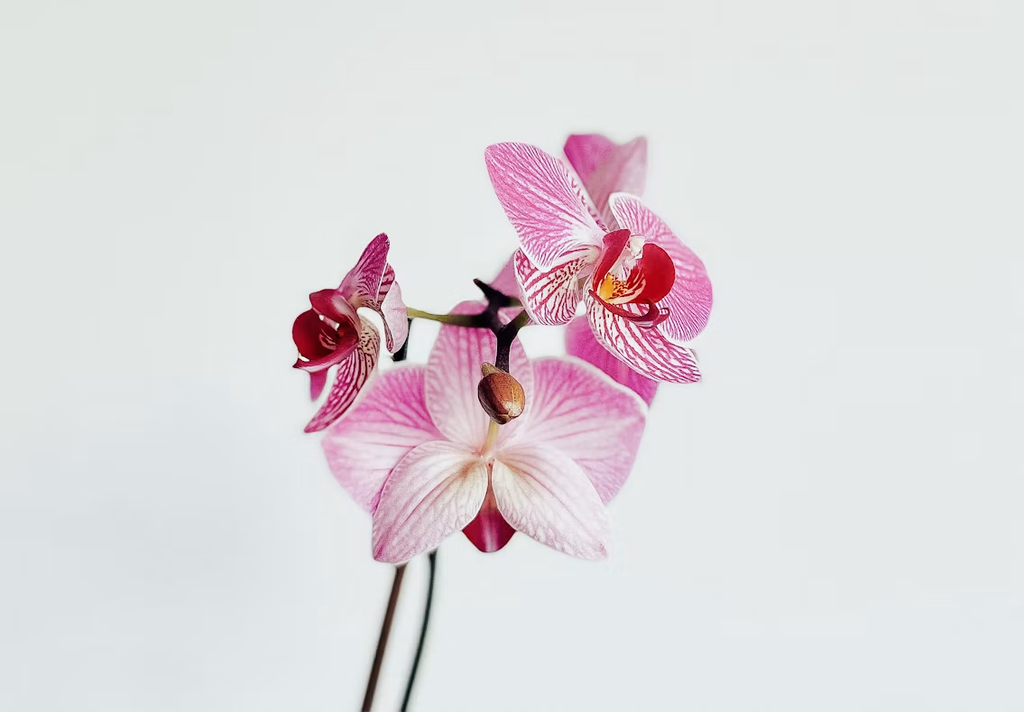
Walk through any nursery and you may come across Phalaenopsis, Dendrobium, Cattleya, Vanda and many other beautiful orchid varieties.
Although their exact growing requirements are not identical, many commonly grown tropical orchids share one important characteristic: they need excellent airflow around their roots.
Many orchids are epiphytes.
That means that instead of growing with their roots buried deep in soil, they naturally attach themselves to trees and other surfaces.
Their roots are exposed to rain, humidity and moving air.
This is why planting many orchids in ordinary garden soil can cause problems. Heavy soil remains wet for too long and reduces airflow around the roots, eventually increasing the risk of root rot.
Instead, orchids are usually grown in loose materials such as:
- Coconut husk chips
- Pine bark
- Charcoal
- Sphagnum moss
- LECA or clay balls
- Special orchid potting mixes
The exact mix will depend on your orchid, your climate and how frequently you water.
Look at the Roots #
One of the easiest ways to understand your orchid is simply to look at its roots.
Healthy orchid roots are generally firm rather than soft or mushy.
For many orchids with visible aerial roots:
Green roots usually indicate that the roots contain moisture.
Silvery or grey roots often indicate that the roots are drying and may soon need watering.
Brown, black or mushy roots can indicate damage or rot.
Your orchid’s roots can often tell you more than a watering calendar ever will.
How Much Sunlight Do Orchids Need? #
One of the biggest mistakes beginners make is putting an orchid in either deep shade or intense afternoon sunlight.
Most commonly grown orchids enjoy bright, filtered light.
Imagine the light underneath the branches of a tree: bright, but protected from the harshest direct sunlight.
That is a good starting point for many orchids.
Morning Sun Can Be Excellent #
Gentle early-morning sunlight can be beneficial for many orchids.
In Indian conditions, especially during hot summers, strong afternoon sunlight can easily burn orchid leaves.
A location receiving bright indirect light throughout the day along with some mild morning sunlight often works very well.
An east-facing balcony, verandah or window is usually a good location.
Signs Your Orchid May Be Getting Too Much Sun #
Watch for:
- Pale or bleached patches
- Yellowing exposed leaves
- Brown or crispy patches
- Sudden leaf scorching
Do not confuse normal leaf ageing with sunburn. One lower leaf gradually turning yellow can simply be part of the plant’s natural growth cycle.
Signs Your Orchid May Need More Light #
Very dark green leaves combined with poor flowering can sometimes indicate insufficient light.
However, lack of flowers can have several causes, so don’t immediately move the plant into strong direct sunlight.
Increase the brightness gradually.
How to Water Orchids Properly #
If there is one area where most beginners struggle, it is watering.
Orchids generally dislike having their roots permanently wet.
But that does not mean they should be kept bone-dry either.
The goal is simple:
Water thoroughly, allow excess water to drain, and let the roots receive plenty of air afterward.
Forget the Fixed Watering Schedule #
You may see advice saying:
“Water orchids every seven days.”
That sounds convenient, but it is not always good advice.
An orchid growing outdoors during a hot Kolkata summer may dry much faster than the same plant kept indoors during winter.
Watering frequency changes depending on:
- Temperature
- Humidity
- Pot size
- Orchid variety
- Growing medium
- Air circulation
- Season
- Whether the plant is indoors or outdoors
Instead of automatically watering every Sunday, check the plant.
A Simple Watering Method #
When your orchid needs water:
- Water the potting medium thoroughly.
- Allow water to flow through the drainage holes.
- Make sure excess water drains completely.
- Return the orchid to its normal position.
For orchids growing in bark or coco chips, soaking the pot briefly can also help the medium absorb moisture.
But never leave an orchid pot standing in stagnant water for long periods.
Avoid Water Sitting in the Crown #
This is particularly important with Phalaenopsis orchids.
Water trapped between the leaves around the crown can sometimes encourage rot.
If water accidentally collects there, gently remove it with tissue or allow good airflow to dry it quickly.
Orchid Humidity: How Much Is Enough? #
Most tropical orchids enjoy moderate to high humidity.
Fortunately, that does not mean you need to turn your home into a rainforest.
Many orchids grow perfectly well in normal household conditions if watering and airflow are managed properly.
In warm and humid places such as Kolkata, natural humidity may already be quite high during much of the year.
In fact, very high humidity combined with stagnant air can create fungal and bacterial problems.
So instead of concentrating only on humidity, remember another important word:
airflow.
Good air circulation around the plants helps leaves and roots dry properly and reduces disease risk.
A shaded balcony, airy verandah or protected outdoor growing space can be excellent for orchids.
The Best Temperature for Orchids #
Different orchids have different temperature preferences, but many commonly sold tropical orchids are comfortable in warm conditions.
Phalaenopsis generally enjoys warm temperatures.
Many Dendrobiums also grow extremely well in India’s warm climate, although different Dendrobium groups can have different seasonal requirements.
The main thing to avoid is sudden temperature stress.
Keep orchids away from:
- Direct hot air from heaters
- Continuous cold air from air conditioners
- Extremely hot enclosed balconies
- Sudden exposure to intense midday sun
Some orchids also respond to a difference between daytime and nighttime temperature when preparing to flower.
Choosing the Right Orchid Potting Mix #
Please don’t take a healthy epiphytic orchid and plant it in ordinary garden soil.
The roots need breathing space.
A good orchid medium should usually be:
- Airy
- Fast draining
- Moisture-retentive without becoming waterlogged
- Slow to decompose
Popular materials include coconut husk chips, charcoal, bark, sphagnum moss and LECA.
Coco Chips and Charcoal #
For warm, humid Indian conditions, a loose combination of good-quality coco chips and charcoal can work well for many orchids.
Coco chips retain some moisture while allowing air spaces around the roots.
Charcoal helps keep the mixture open and improves drainage.
The mix should never be compressed tightly around the roots.
Should Orchids Be Grown in Clear Pots? #
Clear pots can be very useful, especially for beginners.
They allow you to see:
- Root condition
- Moisture inside the pot
- Algae growth
- Rotting roots
- How quickly the potting medium dries
Clear plastic orchid pots with plenty of side and bottom holes are especially convenient.
But clear pots are not mandatory.
What matters most is good drainage and airflow.
When Should You Repot an Orchid? #
You do not need to repot an orchid every few months.
Repotting becomes useful when:
- The growing medium has badly decomposed
- The pot remains wet for too long
- Many roots are rotten
- The plant has completely outgrown its container
- The medium smells sour or unhealthy
- Drainage has become poor
Depending on the growing medium, this may be necessary approximately every one to three years.
How to Repot an Orchid #
Remove the orchid carefully from its old pot.
Gently remove old, decomposed potting material.
Inspect the roots.
Healthy roots should be preserved.
Dead, hollow, completely rotten or mushy roots can be trimmed using sterilized scissors.
Place the orchid into a clean pot with fresh orchid medium.
Do not press the medium tightly around the plant.
Remember: orchid roots need air.
How to Fertilize Orchids #
Orchids need nutrients, but more fertilizer does not automatically mean more flowers.
In fact, too much fertilizer can damage sensitive orchid roots.
A balanced, water-soluble orchid fertilizer can be used during active growth.
Many growers prefer applying a weaker concentration more frequently rather than using a very strong dose occasionally.
This is where the popular orchid-growing phrase comes from:
“Weakly, weekly.”
It doesn’t necessarily mean every orchid must literally be fertilized every week. The idea is simply to use fertilizer conservatively.
Always follow the fertilizer manufacturer’s instructions and adjust according to your orchid’s condition.
Occasionally watering thoroughly with plain water can also help flush accumulated fertilizer salts from the potting medium.
How to Make an Orchid Bloom Again #
This is the part every orchid grower waits for.
After weeks or months of beautiful flowers, one day the final bloom drops.
Many first-time orchid owners think:
“That’s it. The orchid is finished.”
It isn’t.
The flowers have finished—not the plant.
Your orchid now needs time to grow leaves, roots and energy for its next flowering cycle.
What Should You Do With the Old Flower Spike? #
That depends partly on the orchid.
With Phalaenopsis, a green flower spike can sometimes produce additional flowers from a node.
If the spike becomes completely brown and dry, it can usually be cut near the base.
With other orchids such as many Dendrobiums, you should be more careful about removing old canes because they can continue storing energy or even flower again depending on the type.
This is why identifying your orchid variety is extremely useful.
Why Is My Orchid Growing Leaves But Not Flowers? #
An orchid that produces healthy leaves and roots but refuses to bloom is usually not dying.
Possible causes include:
- Insufficient light
- Too much nitrogen fertilizer
- Lack of seasonal temperature variation
- Plant still being immature
- Recent repotting
- Natural seasonal dormancy
- Stress from root problems
Start by checking the light.
An orchid kept in a very dark corner may survive for years but never produce its best flowering display.
Common Orchid Problems #
Orchid Roots Are Brown and Mushy #
This is often associated with root rot.
Possible causes include:
- Overwatering
- Decomposed potting medium
- Poor drainage
- Low airflow around wet roots
Remove badly rotted roots and replace decomposed growing media.
Do not automatically compensate by watering more because the leaves look dehydrated. A plant with rotten roots may look thirsty because it can no longer absorb water efficiently.
Orchid Leaves Are Wrinkled #
Wrinkled leaves often indicate that the plant is not receiving enough water internally.
But the solution isn’t always simply “water more.”
Check the roots.
If the roots are firm but very dry, the orchid may genuinely need more frequent watering.
If most roots are brown, rotten or hollow, the plant may be dehydrated because damaged roots cannot absorb water.
Fix the roots first.
Orchid Leaves Are Turning Yellow #
A yellow leaf does not automatically mean your orchid is dying.
If one old lower leaf slowly turns yellow and eventually falls, that can be perfectly normal.
However, multiple yellow leaves may suggest issues such as:
- Excess sunlight
- Root problems
- Watering stress
- Nutrient problems
- Disease
Look at the entire plant before deciding what is wrong.
Common Orchid Pests #
Orchids can occasionally attract pests such as:
- Mealybugs
- Scale insects
- Aphids
- Spider mites
- Thrips
Inspect both sides of the leaves, flower spikes and hidden areas between leaves.
Small infestations can often be controlled early by physically removing pests and isolating the affected orchid from the rest of your collection.
For larger infestations, use an appropriate plant-safe treatment according to the product label.
Can Orchids Grow Outdoors in India? #
Absolutely.
Many orchids grow wonderfully outdoors in India when they are protected from harsh direct sun and heavy waterlogging.
A bright shaded balcony, verandah, greenhouse or shade-net area can create an excellent environment.
In warm and humid regions such as West Bengal, Dendrobiums in particular can grow vigorously when they receive:
- Plenty of bright filtered light
- Excellent airflow
- Regular watering during active growth
- Quick drainage
- Suitable feeding
Just remember that “outdoors” does not mean placing the orchid under full afternoon sun.
Filtered light is usually much safer.
The Biggest Secret to Orchid Care #
The biggest secret isn’t a special fertilizer.
It isn’t expensive imported moss.
And it isn’t watering exactly once every seven days.
The secret is observation.
Check the roots.
Feel the growing medium.
Watch the leaves.
Notice how quickly the pot dries during different seasons.
Eventually you will stop asking:
“When should I water my orchid?”
You’ll look at it and know.
That is when orchid growing becomes addictive.
One orchid becomes three.
Three somehow become ten.
Then one morning you find yourself inspecting new roots before breakfast and wondering where you can make space for another hanging basket.
Welcome to orchid growing.
Start Your Orchid Collection With Bonotol #
Whether you’re buying your first orchid or adding another variety to an existing collection, starting with a healthy plant makes the journey much easier.
Explore our growing collection of orchids and discover beautiful plants for your balcony, terrace, verandah or home garden.
Shop Orchids at Bonotol:
https://bonotol.com/plants/category/orchid
Give your orchid the right light, plenty of air around its roots, sensible watering and a little patience.
The flowers will be worth the wait.


